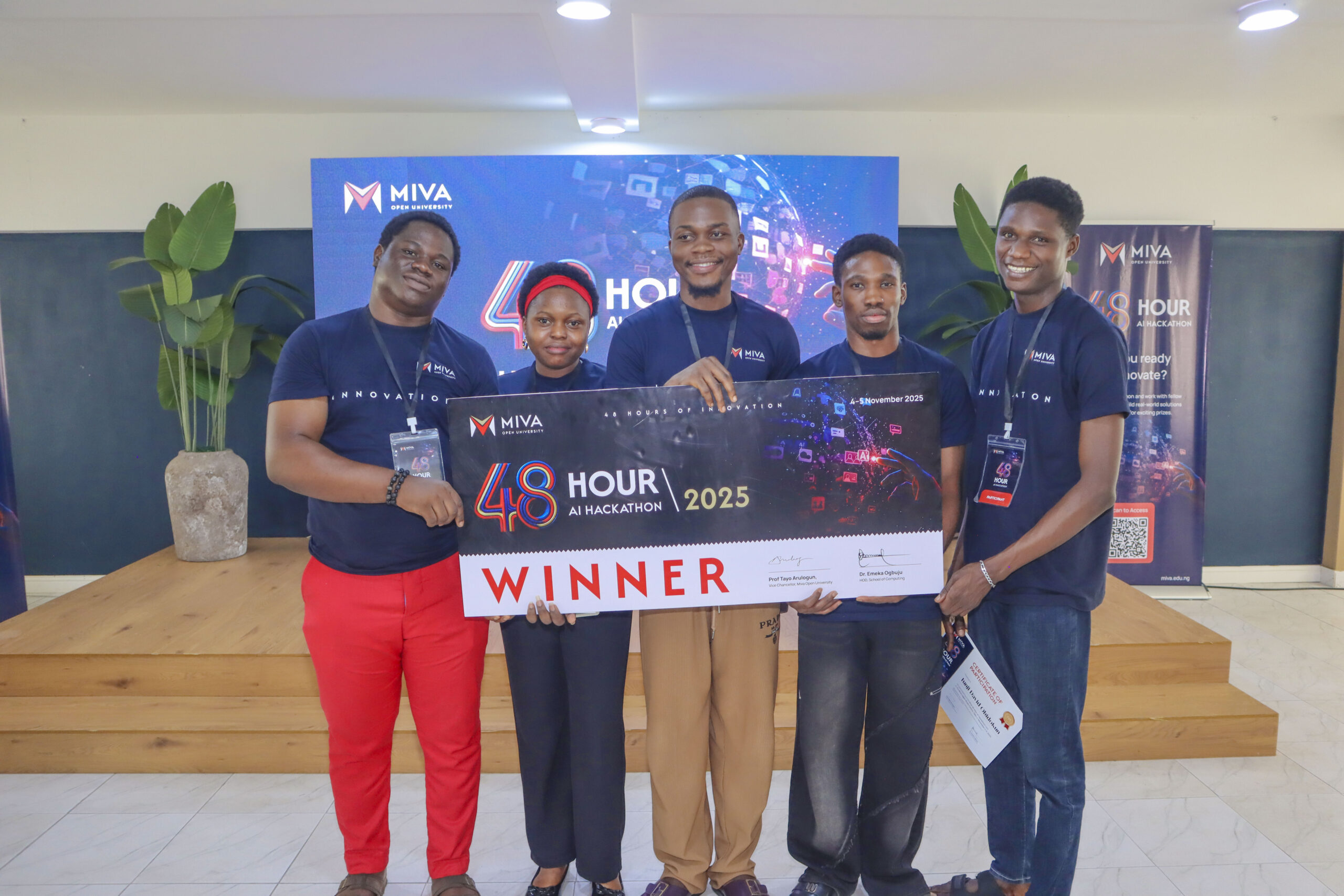
We’re still buzzing from the brilliant ideas that emerged from Miva’s first AI Hackathon less than three months ago. The energy, creativity, and depth of thinking on display showed just how powerful innovation can be when it’s grounded in real-world problems.
In this post, we shine the spotlight on Team Epsilon, the winners of the hackathon. Team Epsilon created Tega, Nigeria’s first AI learning companion designed specifically for neurodivergent learners, including individuals with ADHD, dyslexia, and autism.
We’ll take a closer look at what inspired their solution, how their idea evolved from concept to final pitch, the challenges they navigated along the way, and what they’re doing next as they continue this journey.
But first of all, let’s meet the team!
In This Post
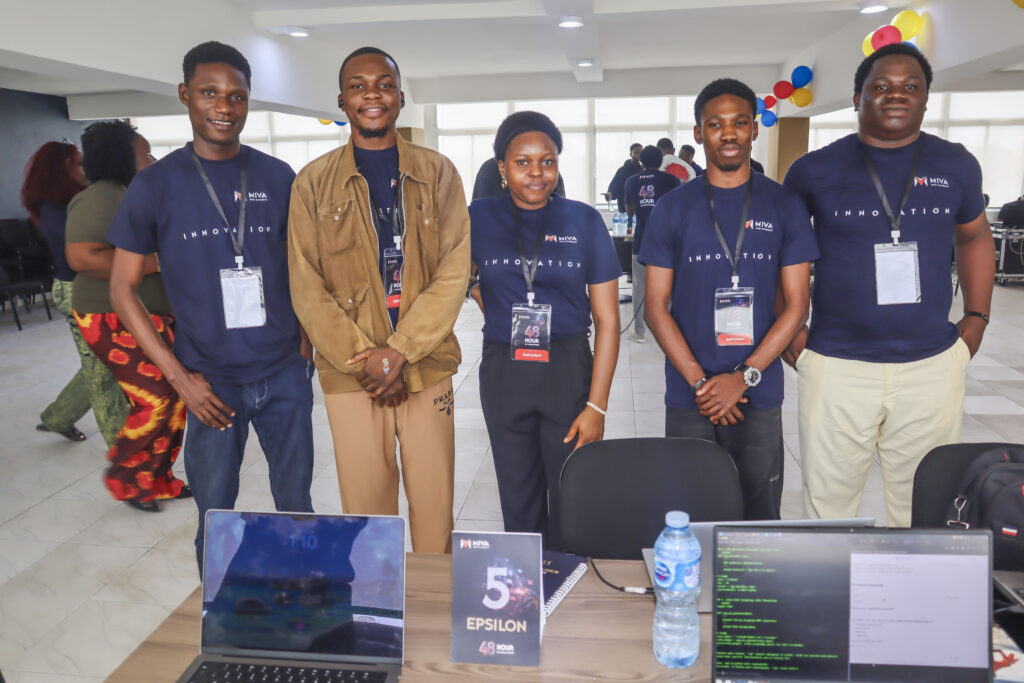
Meet Team Epsilon
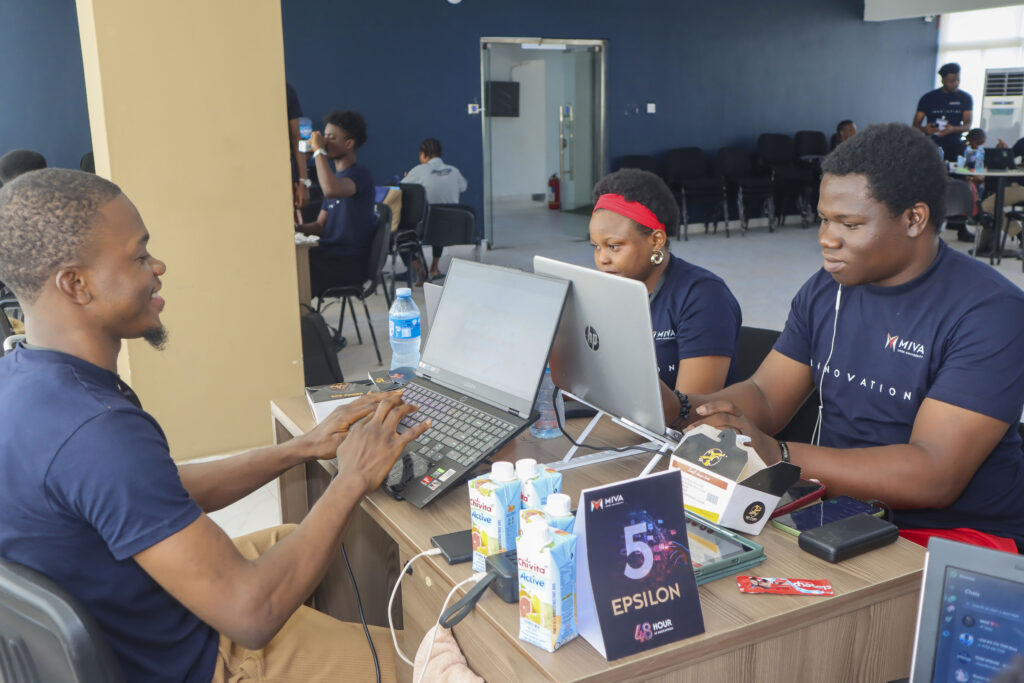
Team Epsilon is made up of a diverse group of innovators united by a shared curiosity for technology and its real-world impact.
Tasie Peace Eberechi is a Computer Science student from the September 2024 cohort. She’s on a clear path toward becoming a software engineer and enjoys turning ideas into working solutions through code.
Emmanuel Udeanukwu, a Cybersecurity student from the May 2024 cohort, is fascinated by the power and psychology of security systems. His dreams of creating security tools so impactful they are both feared and admired—solutions that challenge existing boundaries while reshaping how digital threats and defenses are understood.
Orji Kamdilichukwu Miracle is a Software Engineering student from the May 2025 cohort who’s drawn to the behind-the-scenes magic that keeps products running smoothly and is working toward a future in DevOps.
Tunji David Obidokun is a master’s student in Information Technology from the September 2025 cohort. His interests lie at the intersection of machine learning and artificial intelligence, where he already conducts research.
Trust Obajemini, a Cybersecurity student from the September 2025 cohort in Lagos, Nigeria, is passionate about designing secure products from the ground up. Her career goal is to become a Product Security Designer, ensuring that usability and security coexist seamlessly in modern digital products. She participated in the hackathon virtually.
Usman Balogun is a Cybersecurity student from the May 2025 cohort. With a background in backend development, Usman is transitioning into cybersecurity, where his focus is on application security and ethical hacking, leveraging development experience to better identify and mitigate vulnerabilities.
The Problem, the Idea, and the Space to Build
What real-life problem were you trying to solve, and what inspired it?
We kept seeing the same heartbreaking pattern: bright, creative children being dismissed as “difficult” or “not trying hard enough.” In Nigerian homes and classrooms, children who think differently often grow up believing something is wrong with them. By the time they’re teenagers, they’ve internalised years of being told they’re the problem. We wanted to change that narrative.
[Our] inspiration came from a video of a 9-year-old struggling to read while being scolded for “not concentrating,” when she simply didn’t know why the words kept jumping around on the page. Many other children go through their childhood without anyone, including themselves, understanding what they’re experiencing.
How did the Miva AI Hackathon environment shape your solution?
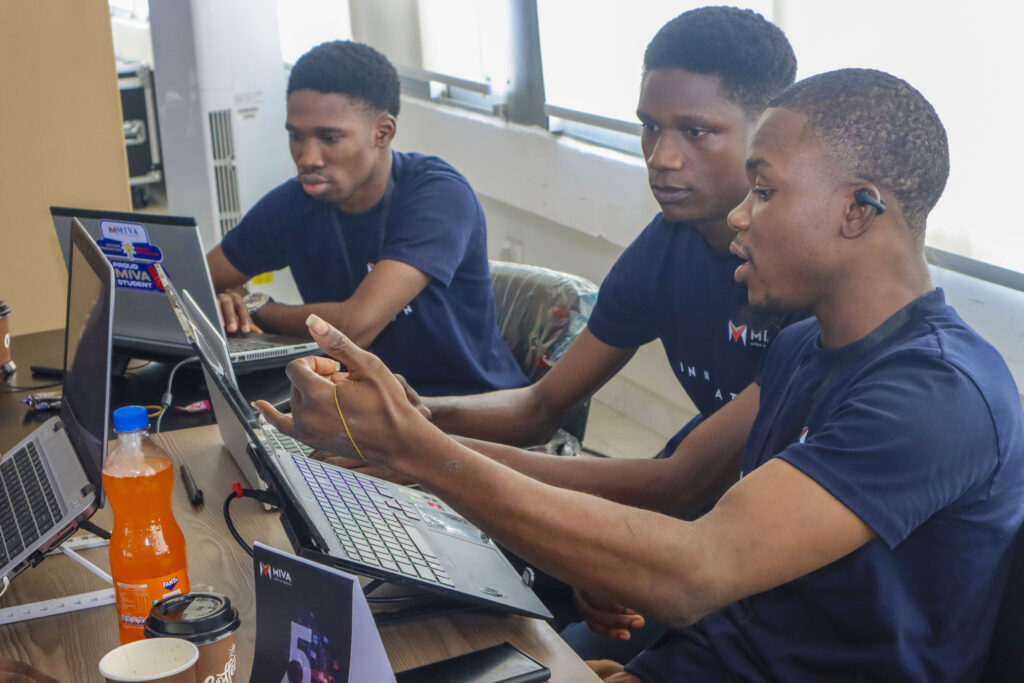
The hackathon forced us to sit with the seriousness of what we were building. We weren’t just creating an app; we were designing something that would speak directly to children about their brains, their experiences, and their sense of self.
That responsibility shaped every decision. [As we built], we removed anything that felt too clinical or intimidating. We constantly asked ourselves: “Would a 10-year-old feel safe using this? Would a 16-year-old feel seen and not labeled?” The [hackhathon] environment kept us honest about building something genuinely helpful, not just technically impressive.
Okay. Please, walk us through your journey from brainstorming to final pitch.
Our first conversation started with ‘frustration’—all of us on the team sharing stories of kids we knew who were being failed by systems that didn’t see them clearly. We asked ourselves, “What if a child could quietly explore their own experiences without fear of judgment? What if ‘different’ could feel neutral, maybe even positive?”
At the beginning of the project, we almost overbuilt, adding too many features and too much information. But we kept coming back to simplicity and safety. When it was time to pitch, we had found our core truth: awareness changes everything. When children understand themselves earlier in life, they carry less shame. That then became the story we tried to tell.
Challenges, Guidance, and Lessons Learned
What’s the biggest challenge your team faced, and how did you work through it?
Designing for an 8-year-old and an 18-year-old at the same time felt impossible at first. Their needs, their language, and even their relationships with the authorities in their lives are completely different. We spent hours debating just ‘tone’. We need to know how you could explain ADHD to a child without making them feel broken, or how you could speak to a teenager without sounding like you were patronising them.
Eventually, we built in layers. We used gentle, visual explanations for younger users, and more detailed information for older ones. Then, we tested each sentence by imagining how a child in a difficult moment would assimilate it.
How did your mentor influence your approach or thinking?
Mr Olamide Afolabi, our mentor, asked us a question: “What happens after a child uses your platform?” That question helped us realise that we weren’t just building awareness; we were potentially starting conversations between children and the adults in their lives.
He also pushed us to think beyond the screen and imagine how parents would respond or what happens if teachers misuse this information. His guidance helped us build a solution that supports dialogue rather than just giving conclusions. Our mentor reminded us that we’re facilitating awareness and understanding, not replacing human connection.
What key lesson did you learn about building technology for real problems?
We learned that when you’re building for vulnerable people, especially children, your responsibility goes far beyond how the tool works. Every word or design you choose, every piece of information you decide to share is important. Technology cannot solve everything, and it shouldn’t try to. But when a solution is designed with deep care and empathy, it can create space for understanding where there was none before. Sometimes the most powerful thing tech does is help people find the right questions to ask.
The Future of Tega and Notes to…
How is the project evolving since the win?
We’re living inside the small but important details right now, and we’re asking ourselves questions like: How do you explain something like stimming to a 7-year-old in a way that doesn’t scare or confuse them? What examples actually make sense in Nigerian homes and classrooms? How do parents know when to seek professional support?
We’re working with educators and families to refine the language of the app so that it feels accessible without being too simple. The biggest shift has been recognising that this tool works best as part of a conversation, not as a standalone answer. So we’re building features that help families talk to each other.
What does “building next” look like for your team?
We’re dreaming of building bigger resources for teachers who want to understand their students better, content that reflects the Nigerian context, partnerships with schools and parent networks. But honestly, what excites us most is the idea of a child somewhere realising, “Oh… this is why my brain works this way,” and feeling relief instead of shame. That’s the moment we’re building toward, and imagine it happening for thousands of young people who are finally getting the chance to understand themselves better.
Why are spaces like Miva AI Hackathon important for young innovators?
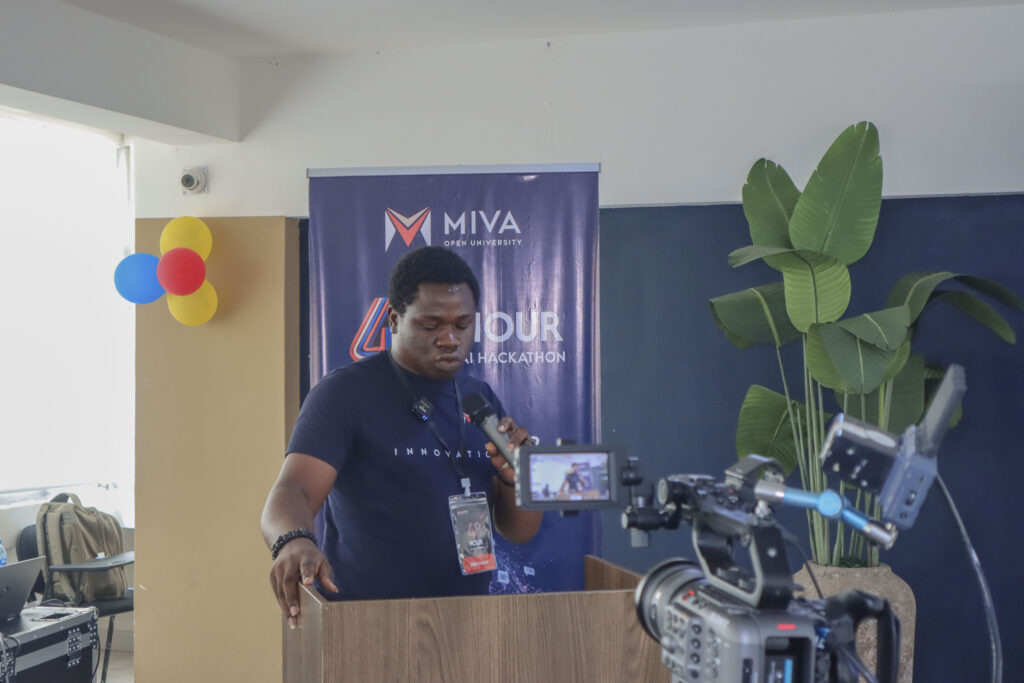
Spaces like the hackathon give students the freedom to tackle problems that really matter, while also learning how to do it the right way. Building something that affects children’s lives can feel scary because it comes with a huge responsibility.
You need guidance, support, and a community that understands just how high the stakes are. The hackathon didn’t just teach us technical skills; it taught us to build with care. It showed that innovation without responsibility is just noise, but innovation with thought and empathy can actually change lives.
What message do you have from your solution and journey to others?
To the children who feel different, know that your brain isn’t broken; it’s just wired its own way, and that’s okay.
To the teenagers carrying years of confusion: there’s a language for what you’ve experienced, and understanding it can set you free.
To parents and teachers: these kids aren’t giving you a hard time. They’re having a hard time.
Our journey taught us that the most radical thing we can do is help people understand themselves earlier, with less pain, and more compassion. Difference isn’t deficiency. It never was.
To Wrap It Up
The journey behind Tega proves that truly impactful technology does not start with code but with a problem and a strong desire to solve it. For Tega, it started with frustration, paired with the compassion to change the story.
Through the Miva AI Hackathon, Team Epsilon demonstrated how innovation can be both bold and gentle—designed not to label, diagnose, or define, but to open conversations and restore dignity. As the project continues to evolve, Tega remains focused on helping children understand their dynamics without shame or confusion.
We look forward to seeing the many other innovative projects from Team Epsilon and the talented students at Miva as they continue to make a difference in the world.