
If you are considering studying at Miva Open University, you may have wondered, asked, or come across questions about WES and whether a Miva degree is recognised outside Nigeria.
To answer that question, it is important to understand WES and what it does as well as what it doesn’t do.
This blog post will also explain terms such as accreditation, recognition, credential evaluation, equivalency, and acceptance, which are often used interchangeably when they do not mean the same thing.
In This Post
What is WES?
World Education Services (WES) is an organisation that evaluates academic credentials earned outside the United States and Canada.
Its reports help universities, employers, professional licensing bodies, and government agencies understand international qualifications. WES has been providing credential evaluation services for decades and operates as a non-profit social enterprise focused on international education and mobility.
For example, someone who earns a degree in Nigeria and later applies for a job, further education, or professional licensing in the US or Canada may be asked to provide a credential evaluation.
The evaluation helps the receiving organisation understand what the Nigerian qualification represents within the US or Canadian education system.
Is Miva Open University Recognised in Nigeria?
Yes.
Miva Open University is a degree-awarding institution licensed and recognised by the National Universities Commission (NUC), Nigeria’s regulatory body for university education.
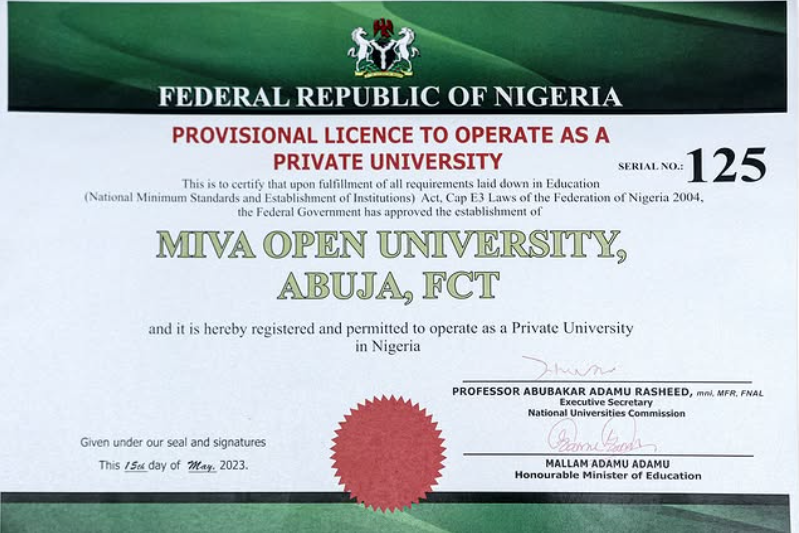
Miva’s programmes are subject to NUC approval processes. For example, the NUC approved additional undergraduate programmes following resource verification exercises, while postgraduate programmes have also gone through NUC approval and verification processes.
This is important because the recognition of a Nigerian university begins with the appropriate Nigerian regulatory authorities.
In other words:
NUC recognition → establishes Miva’s legal status as a Nigerian university.
WES evaluation → helps determine how an individual Miva qualification compares with US or Canadian educational standards.
These are related, but they are not the same thing.
Does WES Accredit Universities?
No. This is one of the most important points to understand.
WES does not function as a university accreditation agency.
Accreditation or official recognition of a university is normally handled by the relevant education authorities in the country where the institution operates.
For Miva, that authority is the National Universities Commission (NUC).
WES’s role is different. When evaluating an international qualification, WES considers the institution, the credential, the education system, and the supporting academic documents before preparing an evaluation report.
WES itself explains that credential evaluation is not the same as credential recognition. The organisation receiving the evaluation ultimately decides whether to recognise the qualification for its particular purpose.
How Does WES Determine Whether a Credential Can Be Evaluated?
First of all, WES requires official academic documents to evaluate an individual’s credential. Depending on the country and institution, these documents may need to be sent directly to WES by the institution or through an approved electronic method.
For a Miva graduate, this may mean Miva sends the student’s official academic records to WES directly. WES reviews and verifies these documents and may request additional verification if necessary.
WES considers whether an institution is officially recognised or accredited in its home country. It may also check whether the institution offers the programme stated on the credential and whether the student’s academic history supports the qualification.
For Nigerian university credentials, WES’s published guidance states that degree certificates and academic transcripts are required.
Document verification is not the same as accreditation. WES does not accredit Miva by evaluating a graduate’s transcript. Miva’s recognition and accreditation in Nigeria are handled by the relevant Nigerian regulatory authorities.

What Does WES Actually Evaluate?
WES does not simply look at the name of a university and declare a degree “approved”.
It evaluates the individual credential.
The evaluation can consider factors such as:
- The institution that awarded the qualification
- The credential or degree earned
- The programme of study
- The academic documents submitted
- The country’s education system
- The duration and level of study
- Coursework and grades, where applicable
- The authenticity of the documents
The final report explains how the international qualification compares with educational standards in the United States or Canada.
This is why students should distinguish between a recognised university and a credential that has been evaluated by WES.
What Is the Difference Between Accreditation, Recognition, and WES Evaluation?
These terms are often confused, but they answer different questions.
Accreditation asks whether a programme has met the standards established by the relevant regulatory or quality-assurance authority.
Institutional recognition or licensing asks whether an institution is legally recognised and authorised to operate and award qualifications in its home country.
Credential evaluation asks: What does this particular qualification compare to in another education system?
Credential recognition is the decision made by the organisation receiving the qualification or evaluation report.
For example, a university in the US may receive a WES report and decide whether the applicant meets its admission requirements.
A professional licensing body may receive the same report and make its own decision about eligibility.
An employer may use the report to understand the candidate’s educational background.
WES is clear that its evaluation report is advisory. The final recognition decision belongs to the institution, employer, licensing body, or government agency reviewing the credential.
Is WES Recognition the Same as WES Credential Evaluation?
No.
This distinction is particularly important.
WES also has a separate WES Program Recognition initiative. According to WES, programme recognition confirms that a specific academic programme has been evaluated and found comparable to programmes offered by regionally accredited institutions in the US or recognised higher education institutions in Canada.
WES also states that programme recognition is not the same as accreditation.
So there are two concepts students should not mix up:
WES credential evaluation:
An individual submits their academic credentials to WES for evaluation.
WES Program Recognition:
WES formally recognises a specific academic programme through its separate programme-recognition process.
If a programme has not received WES Program Recognition, that does not automatically mean a graduate cannot request a WES credential evaluation. WES specifically says that students whose programme is not recognised under its Program Recognition initiative can apply for an individual credential evaluation. Even if a programme is recognised, most employers and institutions still require an individual credential evaluation.
Why Would a Miva Graduate Need a WES Evaluation?
A WES evaluation can be useful when a graduate wants to use a Nigerian qualification outside Nigeria, particularly in the United States or Canada.
Depending on the requirements of the receiving organisation, a WES report may help with:
- University or college admission
- Transfer of academic credits
- Employment
- Professional licensing
- Immigration-related processes
- Demonstrating the US or Canadian equivalent of an international qualification
WES lists these among the uses of its credential evaluation reports.
However, not every organisation requires WES.
Some universities, employers, or professional bodies may accept international qualifications without a WES evaluation. Others may require an evaluation from a particular provider or require a specific type of report.
WES therefore recommends checking the requirements of the organisation receiving the report before applying.
What Is a WES Credential Evaluation Report?
A WES credential evaluation report is an official assessment of an individual’s international academic qualification.
Depending on the type of evaluation, the report can explain the US or Canadian equivalent of a degree or diploma.
A document-by-document evaluation focuses primarily on the credentials earned and their equivalency.
A course-by-course evaluation provides more detail. It can list completed courses, grades and credit equivalents and may include a GPA calculated on a 4.0 scale.
The right report depends on what the receiving organisation requires.
For example, an employer may only need confirmation of degree equivalency, while a university or professional licensing body may require detailed coursework.
Why Can’t Students Simply Search For Their University and See “WES Approved”?
This is another common source of confusion.
WES is not simply an “approved university list” for international students.
The WES application process is designed to collect information about the applicant’s education, determine the documents required, verify those documents, and then evaluate the credentials.
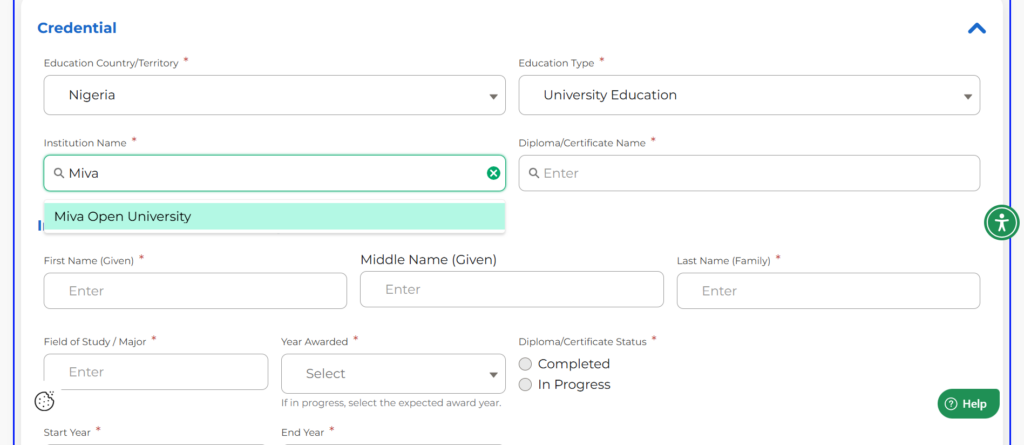
WES’s own Required Documents tool asks applicants to enter their country or territory of education, institution, and credential before displaying the relevant requirements.
Therefore, not finding a university’s name in a search field should not automatically be interpreted as meaning that the university is unrecognised or that its graduates cannot have their credentials evaluated.
The appropriate question is whether the applicant can complete a WES evaluation using the institution and credential information and whether the required official documents can be verified.
Does a WES Evaluation Guarantee Admission or Employment?
No.
This is one of the most important limitations to understand.
A WES report does not guarantee that a university will admit you, that an employer will hire you, or that a licensing body will grant you a professional licence.
WES itself states that the organisation receiving the evaluation makes the final decision about recognition.
Think of WES as helping to translate and verify the value of an international qualification for the organisation assessing it.
The final decision still belongs to that organisation.
So, Is Miva Recognised by WES?
Yes. WES recognises Miva Open University as a legitimate institution because Miva is recognised and licensed in Nigeria by the National Universities Commission, the country’s university regulator.
WES is a separate organisation that evaluates international academic credentials and compares them with educational standards in the US or Canada.
A Miva graduate who needs to demonstrate the value of their qualification abroad can therefore follow the WES credential evaluation process, subject to WES’s document requirements and the requirements of the organisation requesting the evaluation.
It is also important not to describe WES as Miva’s accreditor. WES does not replace NUC accreditation or licensing.
Likewise, a WES evaluation should not be described as a blanket guarantee that every university, employer, regulator, or government agency worldwide will accept a Miva qualification.
The more accurate way to understand it is:
Miva’s institutional recognition comes from the appropriate Nigerian authorities. WES provides an international credential evaluation service that helps organisations understand and assess qualifications earned outside the US and Canada.
For students planning to study, work, or pursue professional opportunities abroad, understanding this distinction can make the process much clearer.