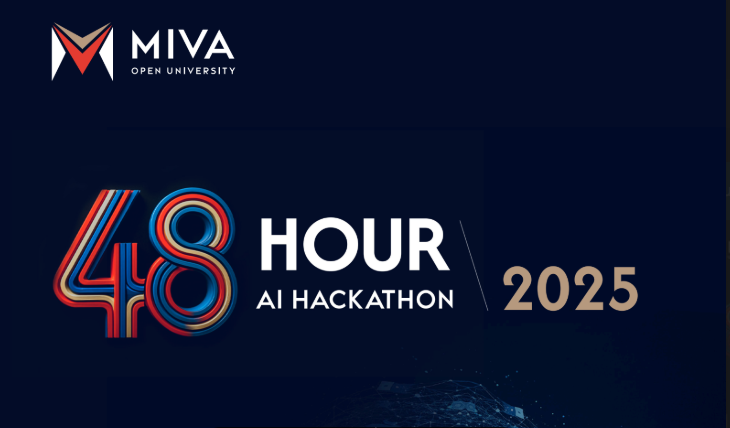
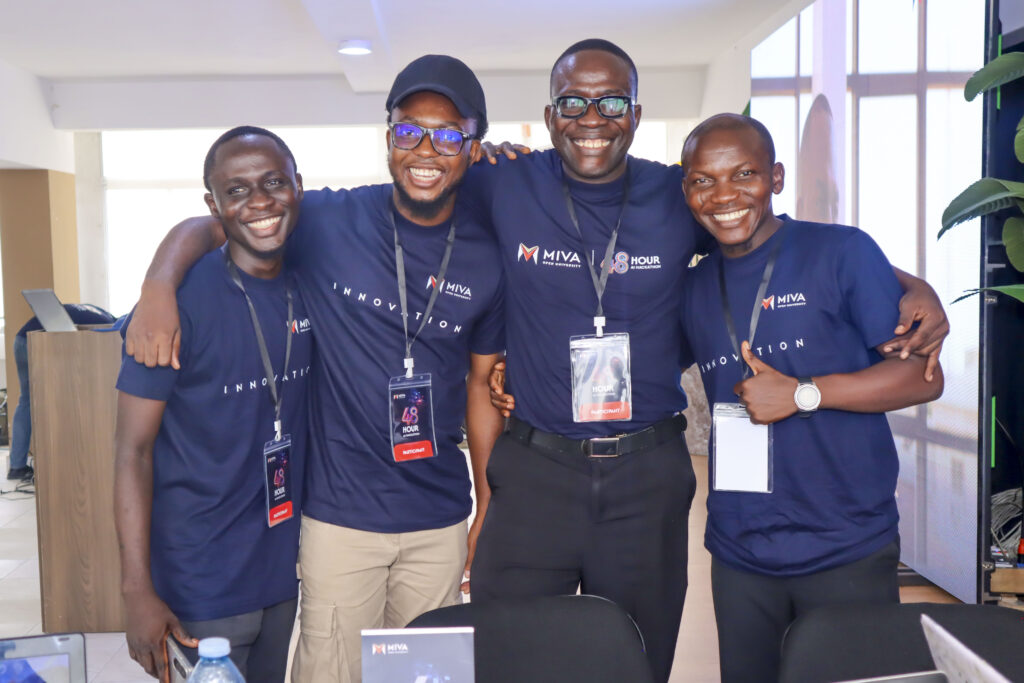
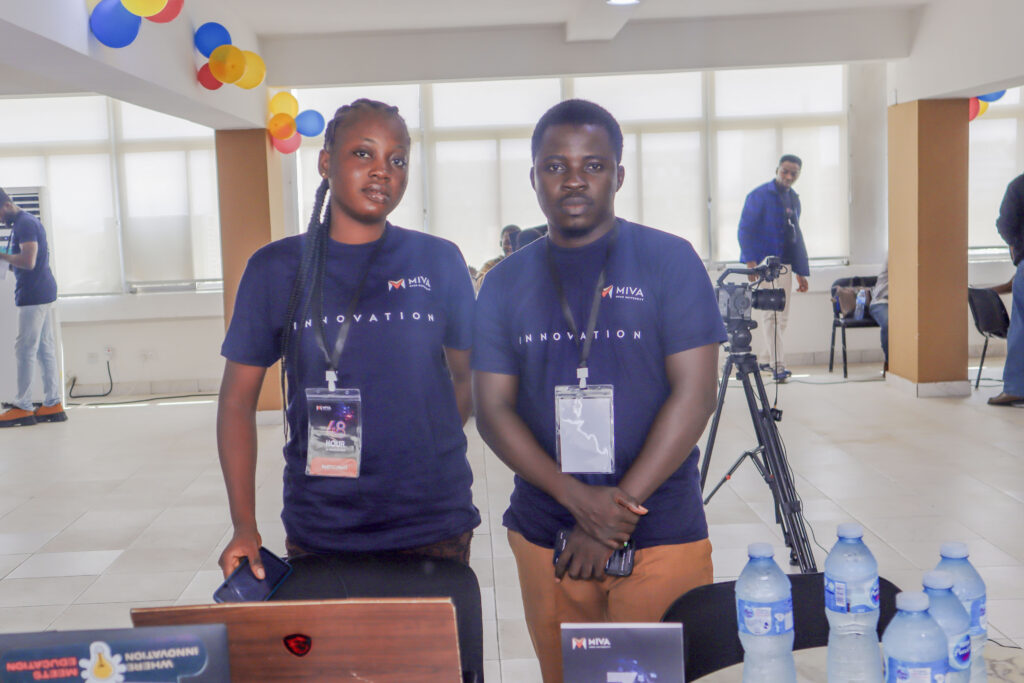
Tuesday, November 4th, through Wednesday, November 5th, was an exciting time for Miva’s School of Computing and MIT students who participated in Miva’s first AI Hackathon. From the moment students streamed in on the morning of November 4th, 2025, laptops in hand and ideas buzzing, it was clear this was more than just another event. It was a time of innovation, curiosity, collaboration, and a desire to win.
The AI Hackathon brought together undergraduate and master’s students, industry experts, and mentors from companies such as Digital Encode, Touch and Pay Technologies, ZeroComplex AI, SmartBloks, and various organisations. Over two intense days, participants were challenged to design and build AI solutions that could solve real-world problems.
In This Post
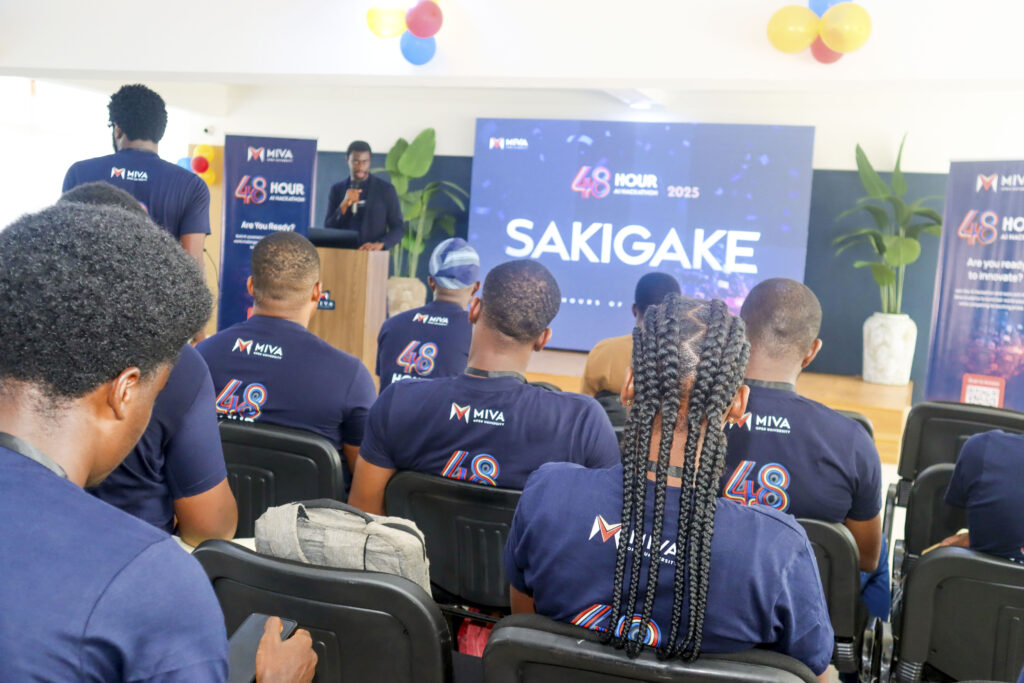
An Eager Kickoff
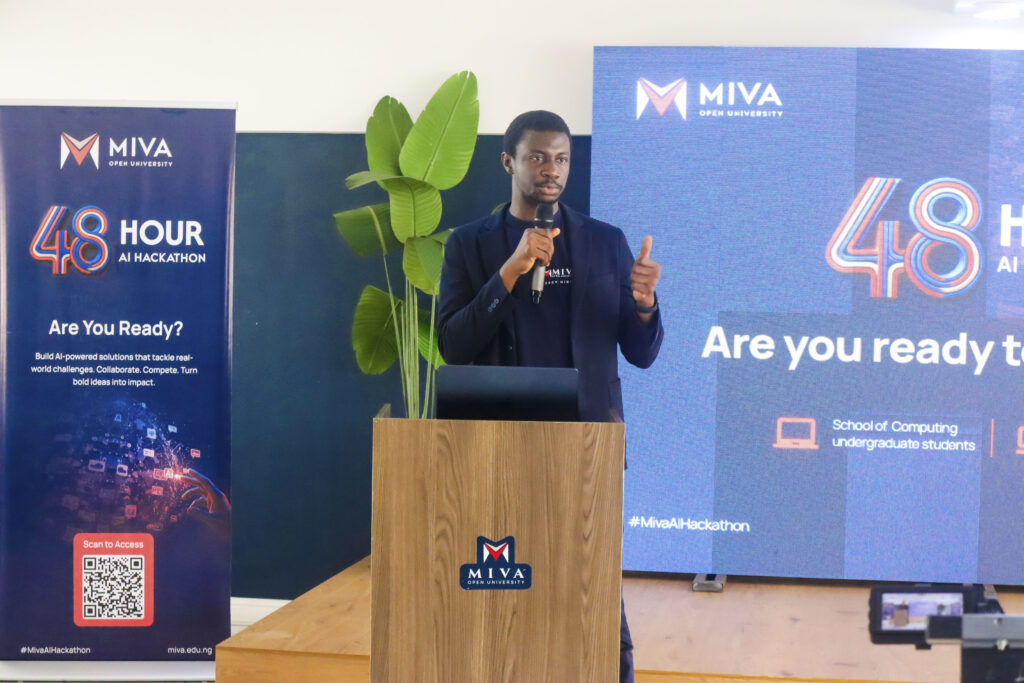
Opening the event, AyoOluwa Nihinlola, Chief Content Officer of the uLesson Group, set the tone with an important message to keep in mind. “As computing students, it’s important to remember that employers look beyond grades or certificates. The first question they ask is, ‘What have you done?’ Practical experience and problem-solving matter most. That’s what this hackathon represents: an opportunity to create, test, and prove what we can do.”
He continued with an inspiring message on creativity and courage. Speaking about Miva while introducing the Japanese word “sakigake”—meaning “forerunner”—he said, “We don’t wait for permission; we create the path. We are pioneers in education and innovation.” His words resonated deeply, reminding everyone that innovation begins with boldness and a willingness to try.
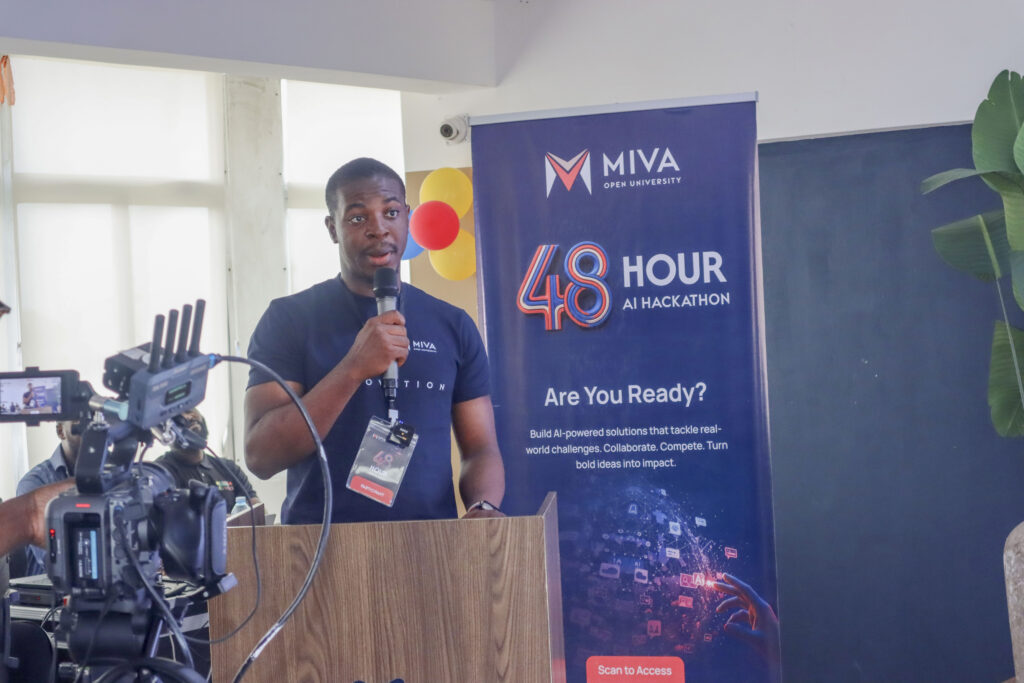
AyoOluwa Nihinlola, Chief Content Officer of the uLesson Group, during his opening remarks at Miva’s first AI Hackathon.
From An AI Startup Founder
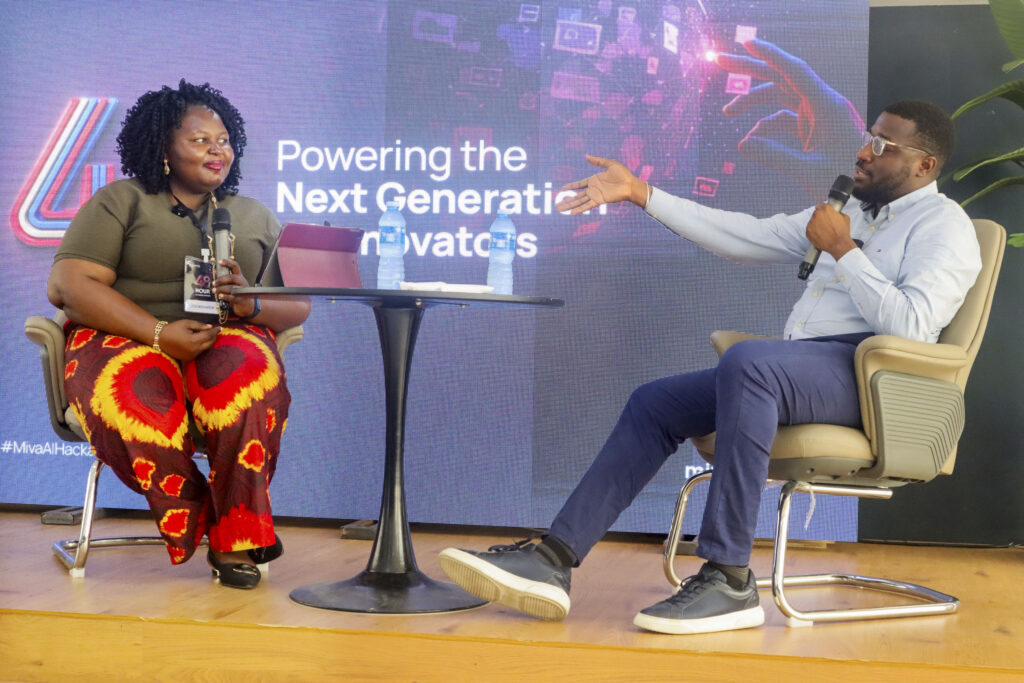
During a discussion facilitated by Binta Gali Agbonnika, Senior Manager of the Career Advancement Centre at Miva Open University, guest speaker Kehinde Olateru, founder of ZeroComplex AI, shared his journey from solving interbank payment disputes to building an AI startup. His story offered a rare, honest look at entrepreneurship—the wins, the struggles, and the lessons in between. “Execution matters more than ideas,” he told students.
“[Experiential knowledge] is the most important thing,” he said. “Theoretical knowledge is good, but experiential knowledge helps you connect the dots faster. If you want to solve a problem in education, work in that space. If it’s finance, get into that environment. When you understand a problem from the inside, you gain real insight that shapes better solutions.”
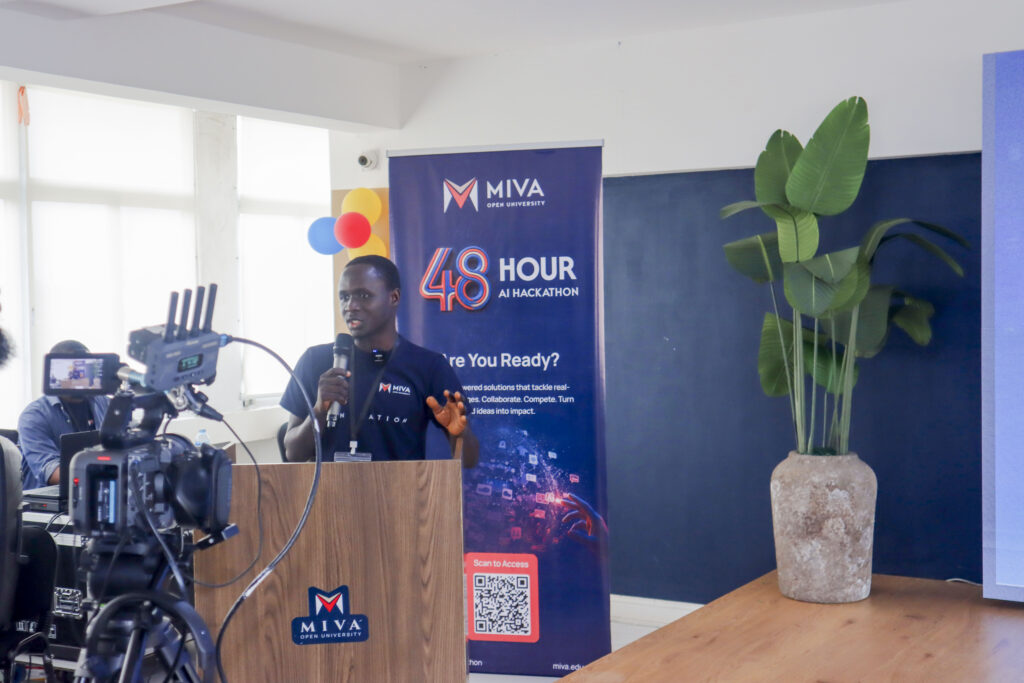
Binta Gali Agbonnika, Senior Manager of the Career Advancement Centre at Miva Open University and Kehinde Olateru, founder of ZeroComplex AI, during a discussion at the Miva AI Hackathon.
When he spoke about overcoming challenges, Kehinde Olateru mentioned how difficult it was to get people to take the company seriously in the beginning. Then he revealed what turned the tide: “First, you must be someone people trust; [be] dependable and consistent. Your word must mean something. My work experience helped because I had relationships across different industries.
“Also, be prudent with resources. When investors give you money, they’re taking a risk. Don’t make them regret it. Mismanaging funds doesn’t only hurt you; it hurts the ecosystem. Some founders misuse funds, and it affects everyone else trying to raise capital. Startups done right can change lives and create opportunities. Look at companies like Miva; they’re proof that bold ideas can build entire industries.”
The Future of Work and Learning
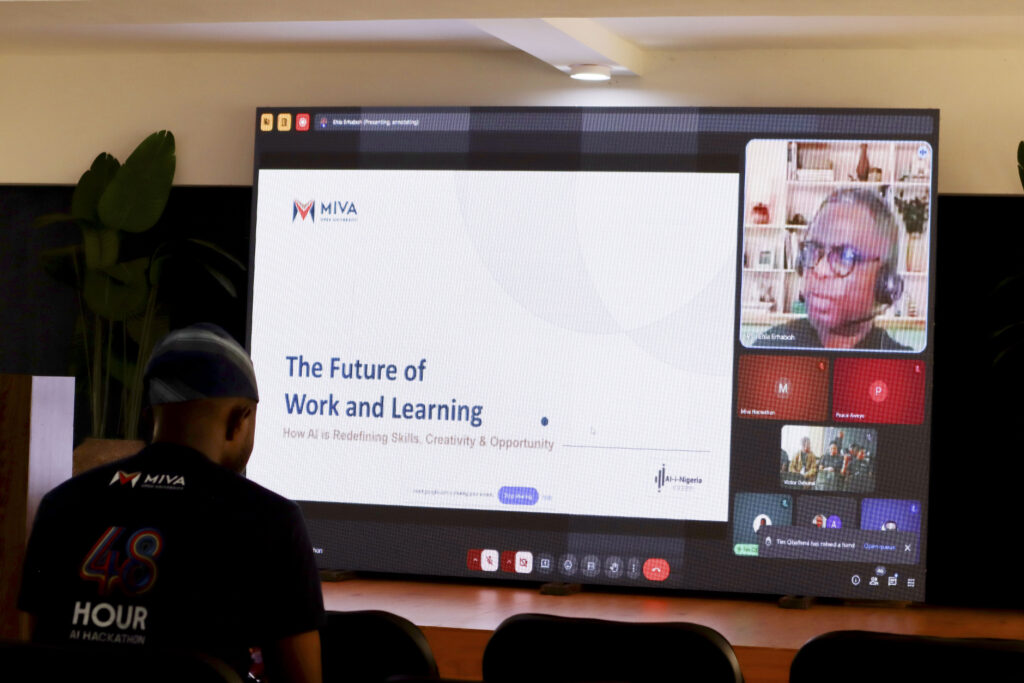
Another highlight was Ehia Erhuboh, co-founder of AI in Nigeria, who explored the future of work and AI. “Change is happening fast. Skills become outdated within years, not decades. AI tools are already replacing junior software developers with less than two years of experience.”
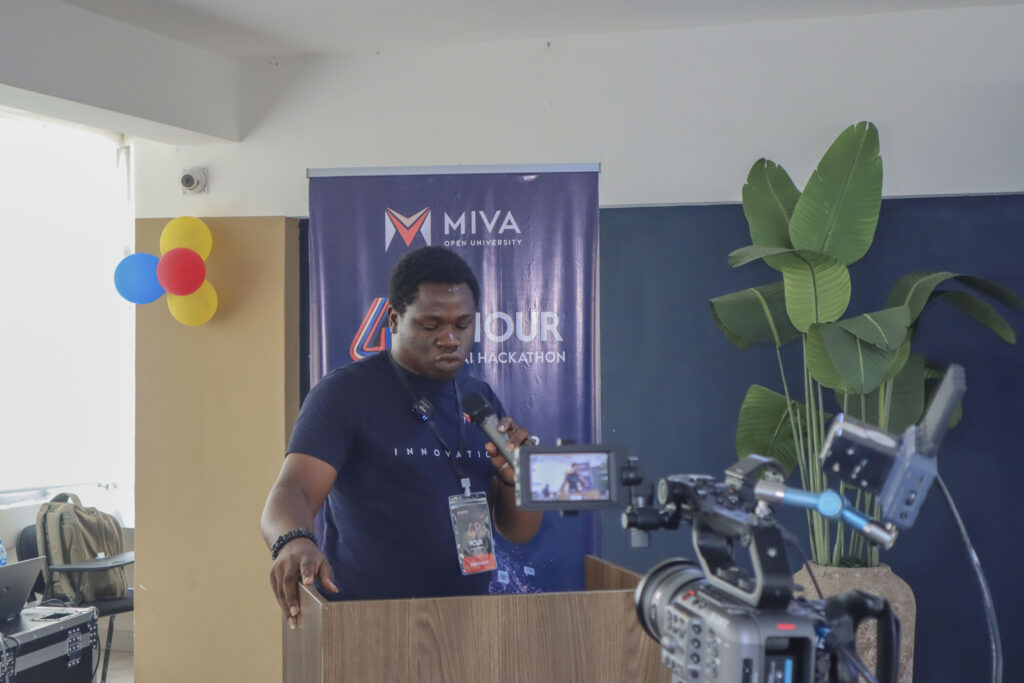
Ehia Erhuboh, co-founder of AI in Nigeria, during his workshop on “The Future of Work and Learning”.
Based on the World Economic Forum’s yearly reports showing the top skills needed for the future, he shared how analytical thinking, problem-solving, creativity, curiosity, lifelong learning, and systems thinking consistently top the list.
“To thrive, we must learn continuously, accept feedback, and think in systems, not silos. Collaboration matters more than competition,” he said, urging students to stay adaptable and collaborative and continuously learn.
The hackathon started properly, and participants, on-site and virtual, brainstormed problems to solve and how. Mentors from partner organisations joined online, helping teams refine their concepts into workable solutions.
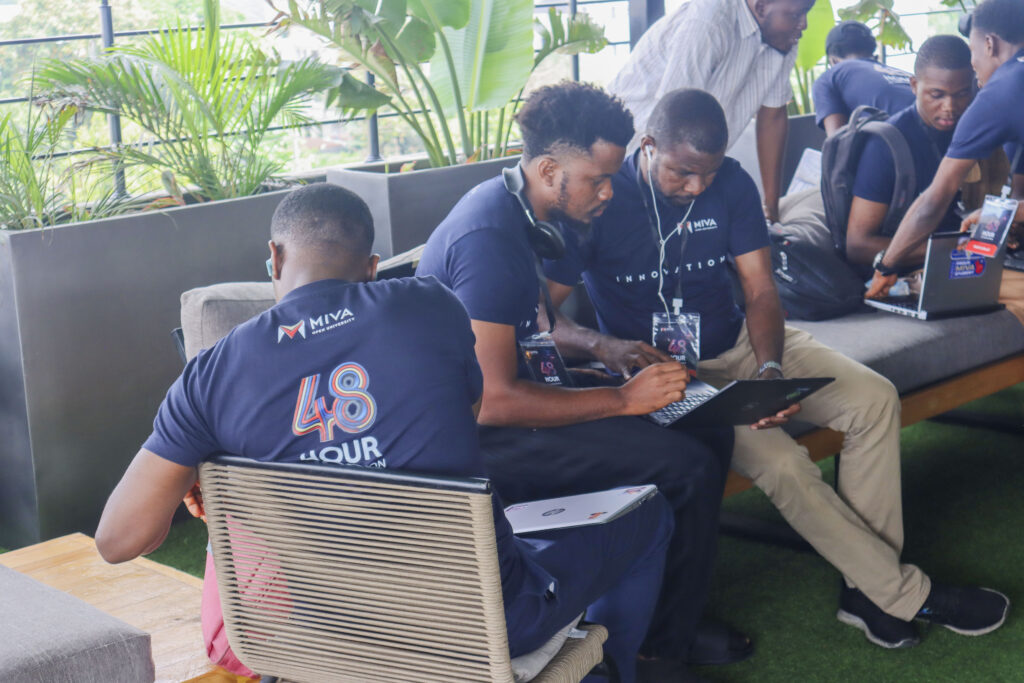
Late into the night, many students kept working on prototypes and debugging code.
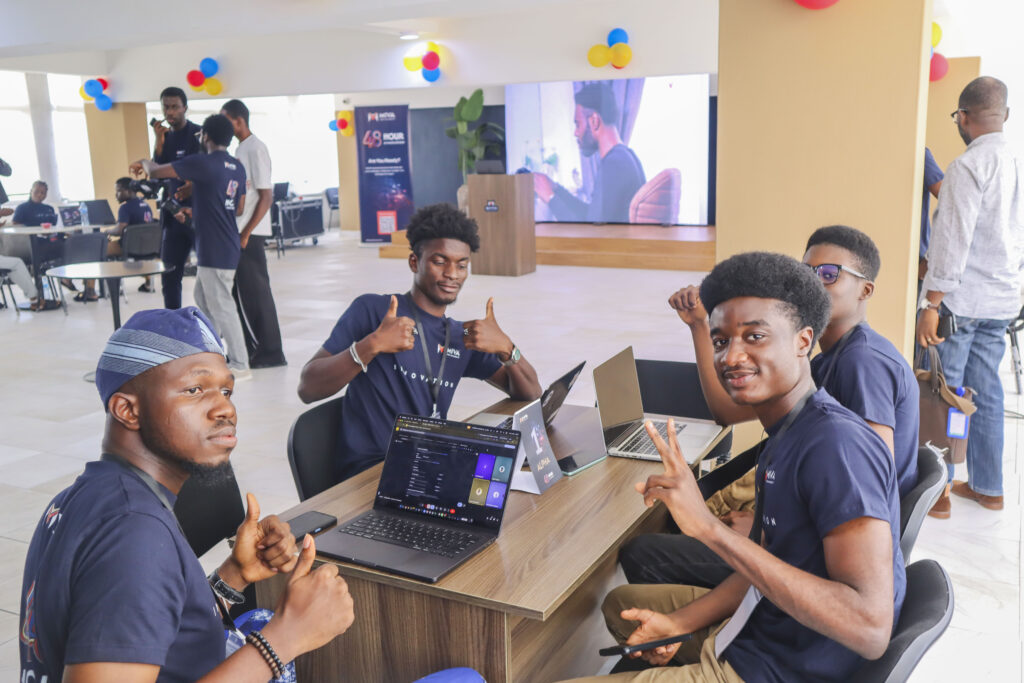
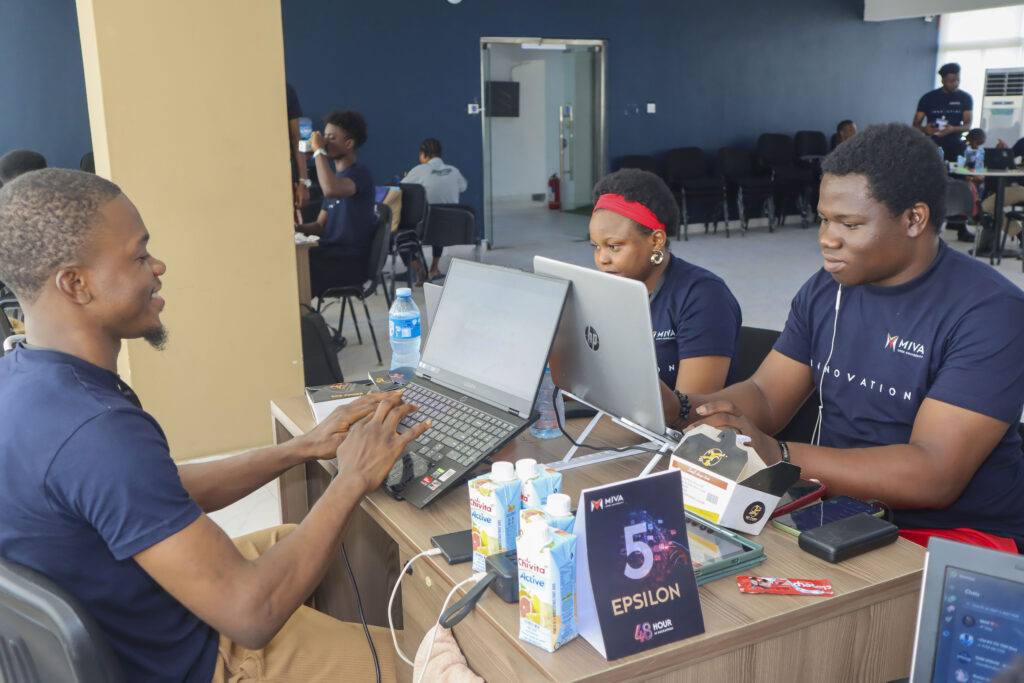
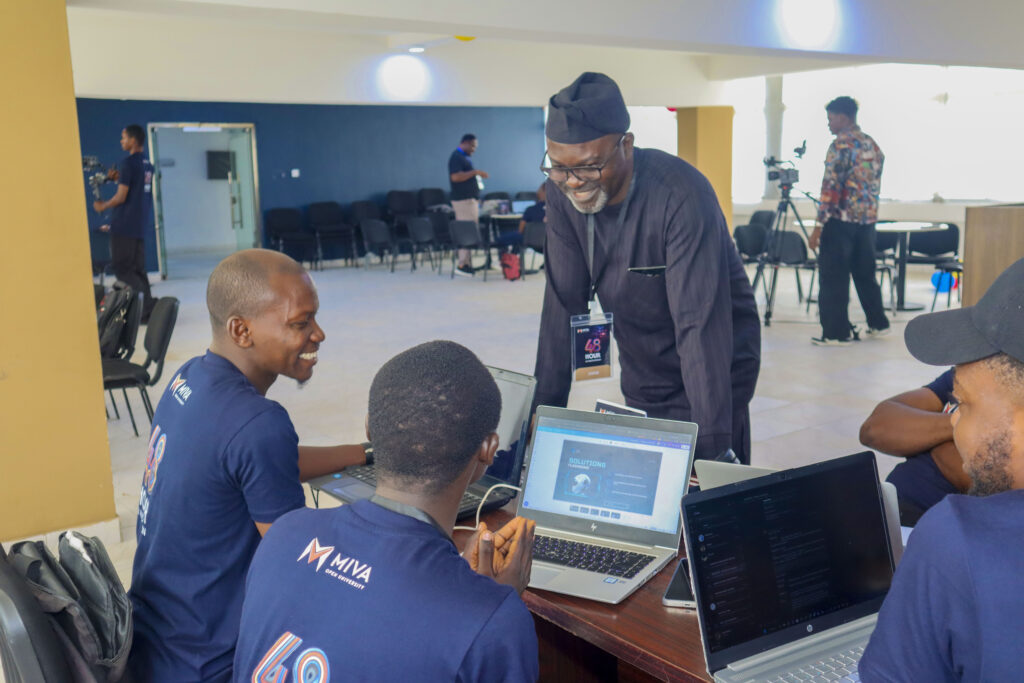
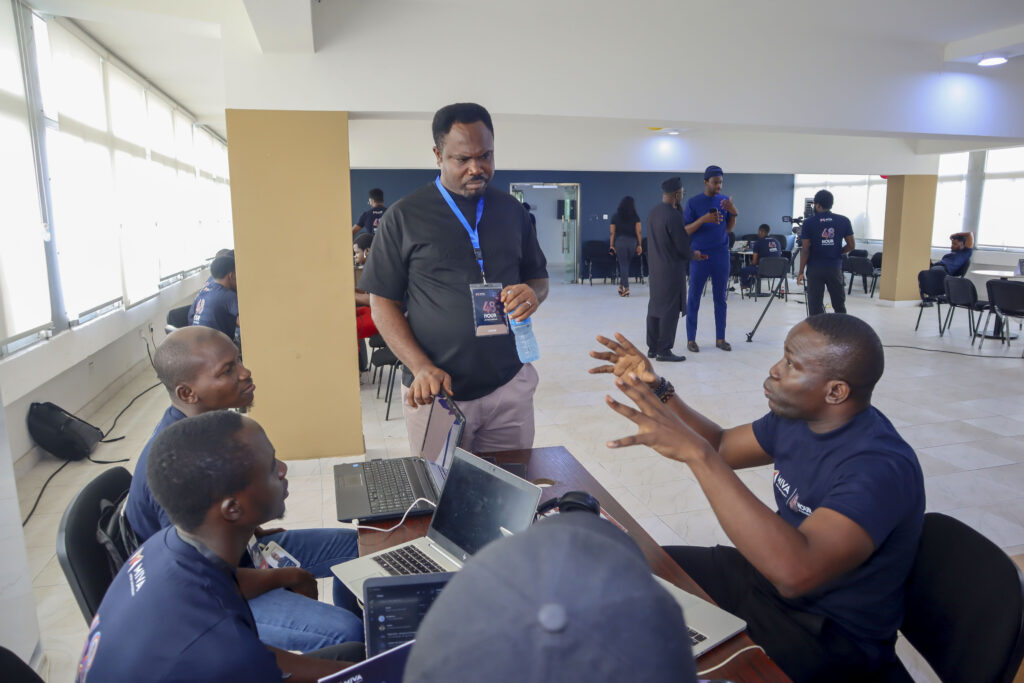
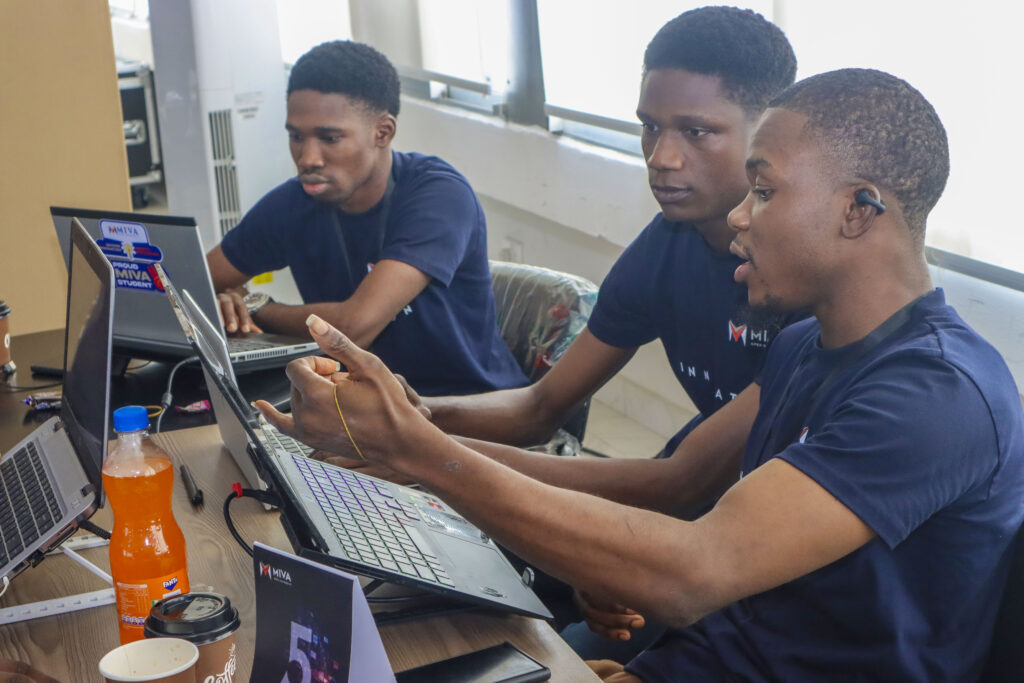
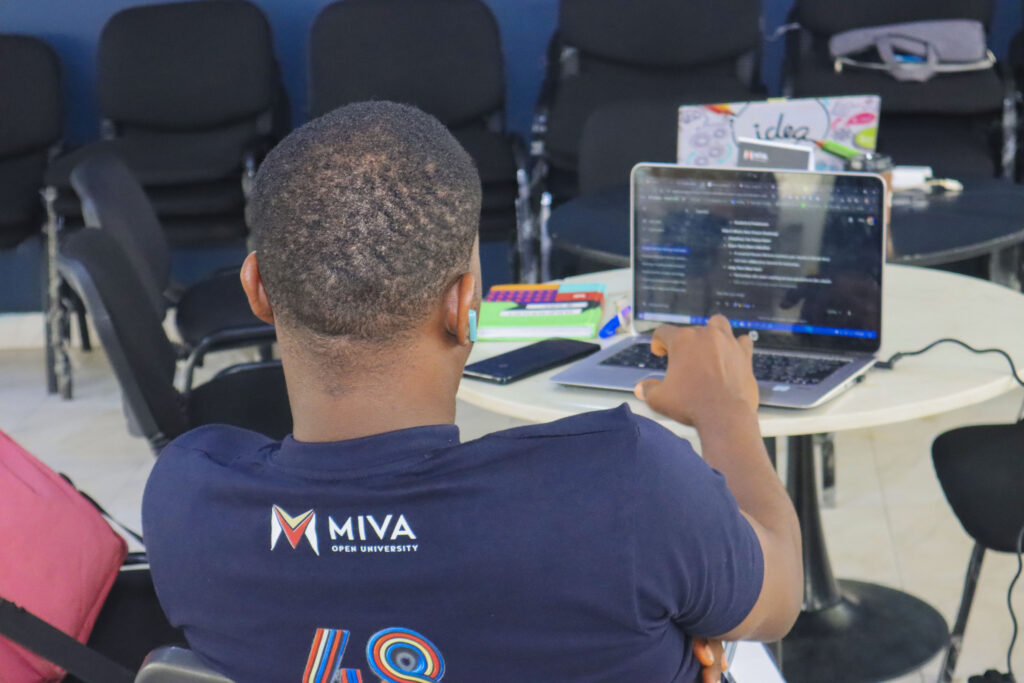
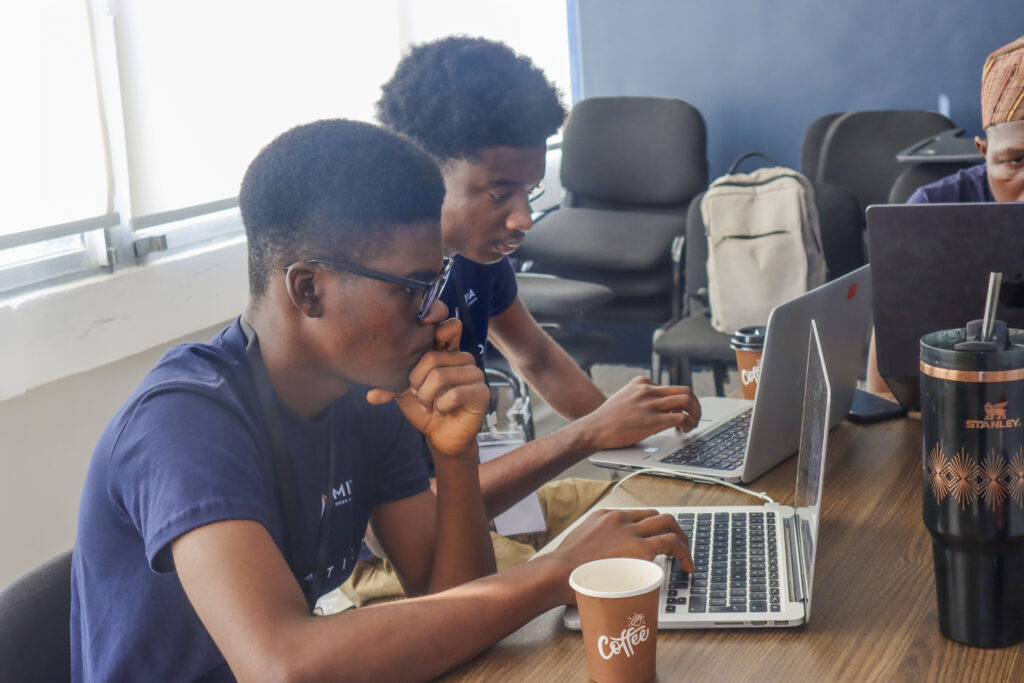
Shots of the on-site participants from day one and day two.
The 5Rs of A Memorable Pitch
By day two, teams were polishing programmes, testing features, and rehearsing their presentations for the judges. Afterwards, Napa Onwusah, “The Revenue Mechanic”, led a lively mini-workshop on pitching. She shared practical insights on how to make an idea unforgettable, not just through data or design.
Drawing from Maya Angelou’s famous quote, “People will forget what you said, people will forget what you did, but people will never forget how you made them feel,” she urged participants to focus on empathy, simplicity, and human connection.
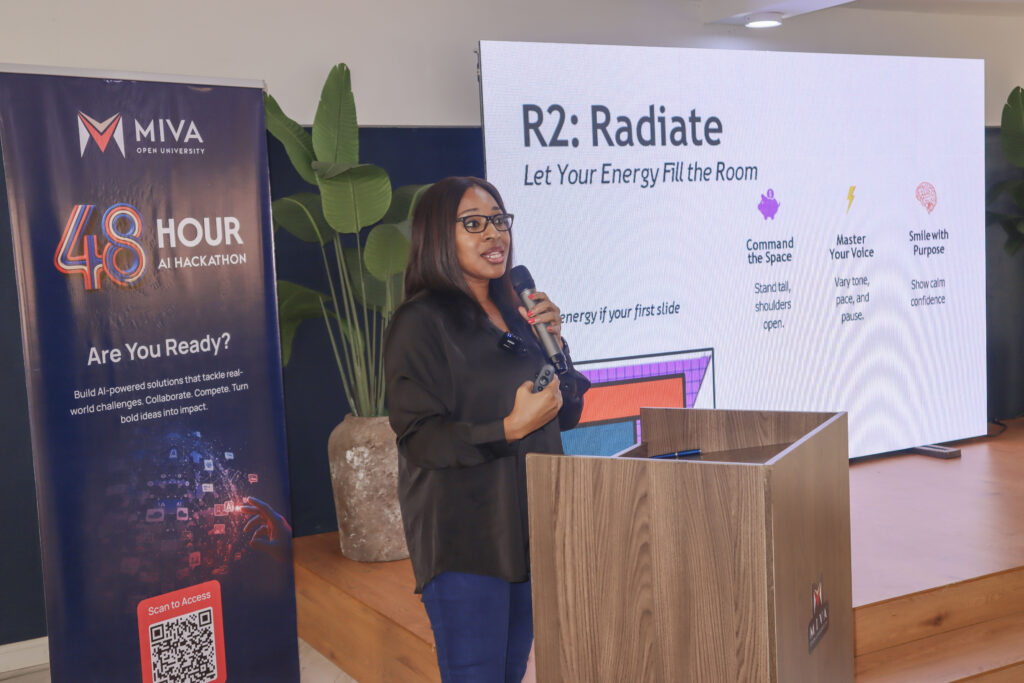
Napa Onwusah, “The Revenue Mechanic”, during her pitching workshop.
Through the 5 R’s of a memorable pitch—Resonate, Radiate, Reveal, Relate, and Resound—she explained that the best pitches don’t just inform; they move people. By starting with a relatable story and speaking clearly, presenters can build an emotional connection long before showing a single slide.
Building and Pitching the Future
In ten minutes each, Teams Alpha, Beta, Delta, Epsilon, and Gamma took the stage to present their AI solutions before the judges and observers. Team Alpha developed a productivity tool for students; Team Beta created an interview preparation platform; Team Delta built a study summariser and tutor; Team Epsilon designed a study tool for neurodivergent learners; and Team Gamma created a personalised study coach.
PadiMi by Team Alpha
PadiMi by Team Alpha is a smart student planner designed to help students organise their academic life in one place by combining task management, scheduling, and productivity tracking into a single dashboard. It allows users to add and manage daily tasks, view their schedules in a calendar format, set priorities, and track progress through completion rates and productive hours.
With a clear dashboard that shows what needs to be done each day and simple navigation across features like analytics and settings, PadiMi helps students stay organised, manage their time better, and keep up with classes, assessments, and personal study activities.
Reframe AI by Team Beta
Reframe AI by Team Beta is an AI-powered interview coach designed to help job seekers translate their experience into clear, confident answers that employers want to hear, especially when switching careers or coming from non-traditional backgrounds. Instead of just practising interview questions, it analyses a user’s response and reframes it from “what I did” to “what I can do for you”, helping users clearly show their value across different industries.
Built with a modern tech stack including React, FastAPI, AI models, and cloud infrastructure, Reframe AI acts as a personal career translator, with future plans to add AI-powered resume reframing, team features for bootcamps, partnerships with career platforms, and a B2B version for corporate career development.
FlashMind AI by Team Delta
FlashMind AI is a personalised learning platform that helps students study more effectively by turning school materials into clear, easy-to-use learning tools. It can summarise lecture notes and PDFs, automatically generate quizzes and interactive tests, and create instant flashcards for quick revision.
The system provides accurate, curriculum-aligned feedback by restricting responses to verified school content, ensuring safe and reliable learning support. FlashMind is designed to help students better understand complex subjects, revise efficiently within tight deadlines, and build confidence without relying on expensive or unavailable tutors.
Tega by Team Epsilon
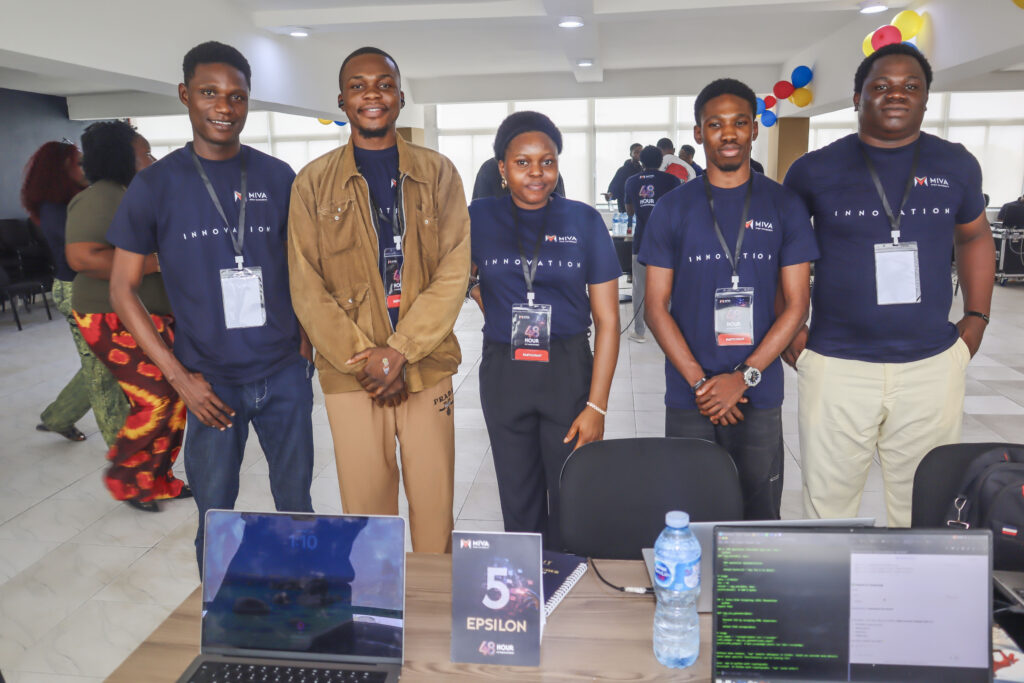
Team Epsilon built Tega, an AI-powered learning companion designed specifically for neurodivergent learners in Nigeria, including individuals with ADHD, dyslexia, and autism. The product delivers personalised, patience-first learning through adaptive micro-lessons that break complex topics into short, manageable steps, with unlimited retries and no time pressure.
Tega uses multimodal learning—voice-first guidance, visual explanations, and interactive exercises—and was built to work offline, on low-end smartphones, and in local Nigerian languages and contexts. By combining personalised onboarding, adaptive AI-driven lesson delivery, and ADHD-friendly features with a family monitoring dashboard, Team Epsilon created an inclusive, locally relevant learning system that teaches practical academic and life skills in a way traditional classrooms do not.
StudySpark by Team Gamma
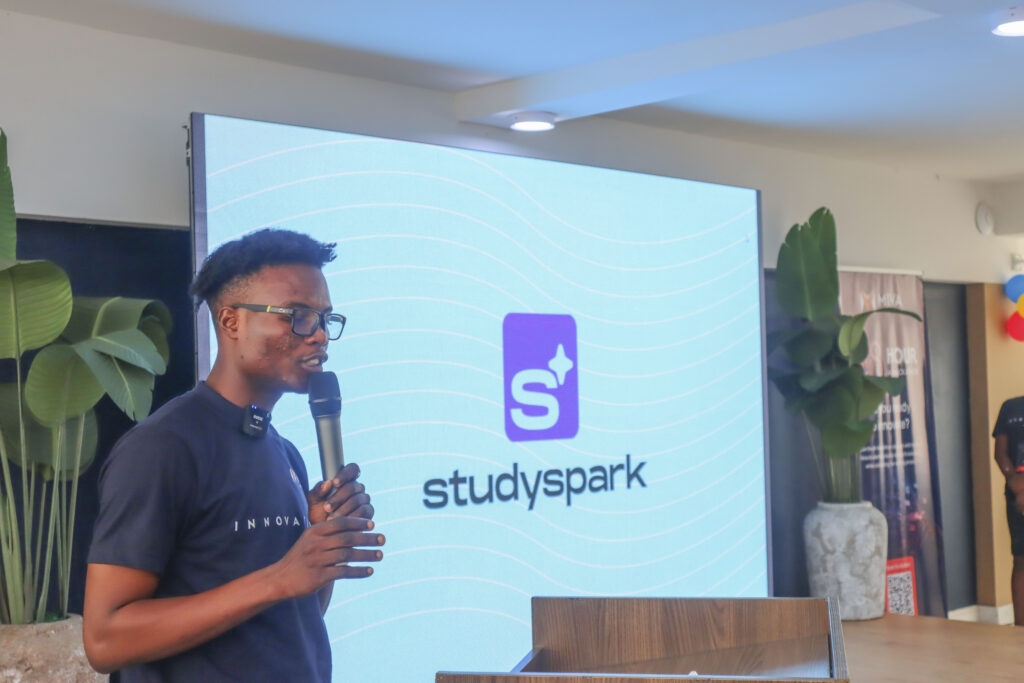
Team Gamma developed StudySpark, an AI-powered, mobile-first study companion designed to help working-class and open-university students stay consistent, organised, and exam-ready despite limited and unpredictable study time. The product uses predictive analytics and an AI engine to create personalised learning paths, generate adaptive quizzes, deliver smart reminders, and provide performance insights that highlight strengths and learning gaps.
StudySpark also transforms course materials into concise summaries, recommends targeted resources such as videos and textbooks, and offers CBT exam simulations to help students practise under realistic conditions. Built around AI summarisation, adaptive question generation, smart notifications, and gamified social features, StudySpark turns short study moments into effective learning experiences that improve motivation and exam performance
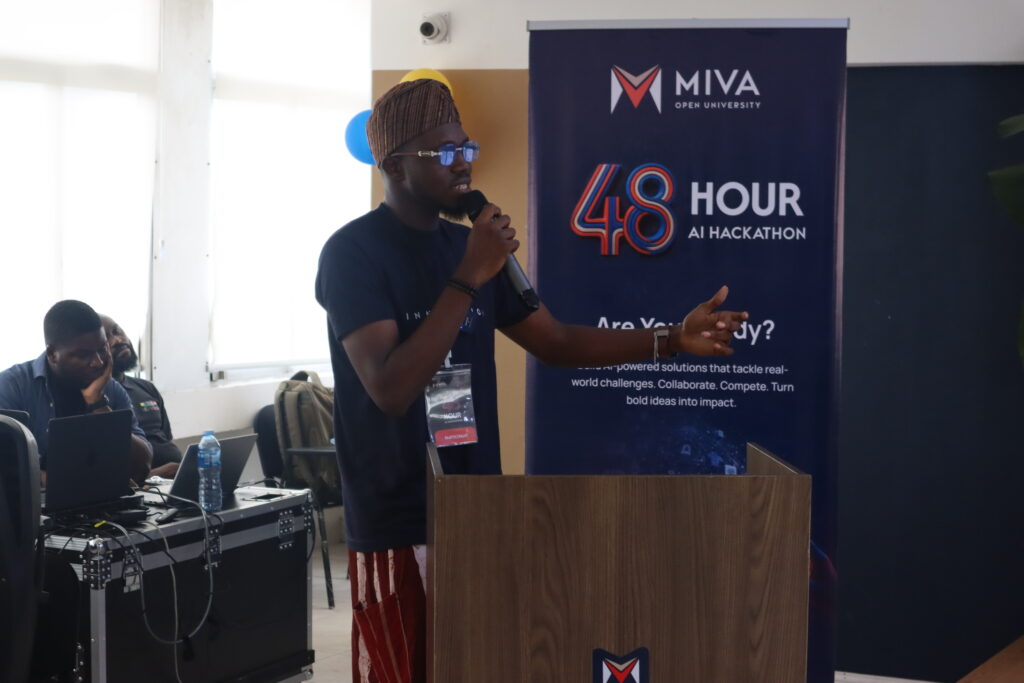
Representatives of Teams Alpha, Beta, Delta, Epsilon, and Gamma during their presentations.
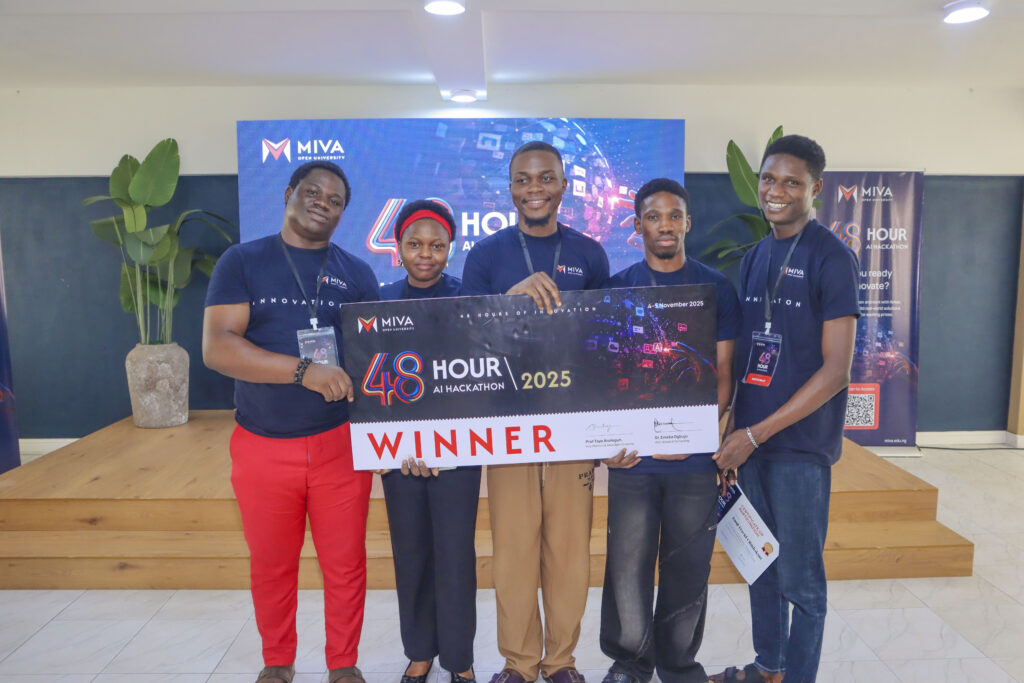
The feedback from the judges (made up of industry experts) brought a wave of insight, recommendations, and light humour. Team Epsilon was announced as the winner, with Teams Delta and Gamma coming second and third, respectively.
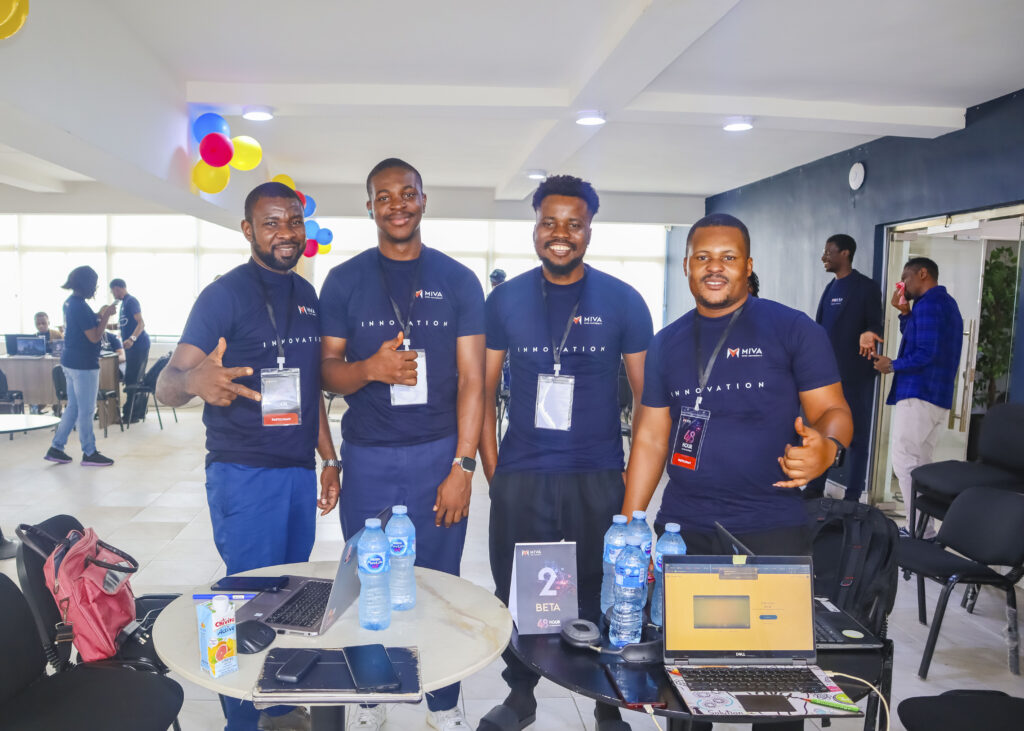
On-site participants of Team Epsilon, winners of Miva’s first AI Hackathon.
Miva’s first AI Hackathon was definitely an amazing learning experience, not only for the winners but for every team that had dared to innovate, collaborate, and see their ideas through to the end.
Subscribe to our newsletter for exclusive content and expert tips delivered straight to your inbox.
Manage Consent
By clicking "Accept Cookies", you agree to the storing of cookies and similar technologies on your device to provide online services, enhance the performance and functionality of our services, analyze the use of our website, and assist with our advertising and marketing efforts, in accordance with the Miva Open University privacy policy.
Functional
Always active
The technical storage or access is strictly necessary for the legitimate purpose of enabling the use of a specific service explicitly requested by the subscriber or user, or for the sole purpose of carrying out the transmission of a communication over an electronic communications network.
Preferences
The technical storage or access is necessary for the legitimate purpose of storing preferences that are not requested by the subscriber or user.
Statistics
The technical storage or access that is used exclusively for statistical purposes.The technical storage or access that is used exclusively for anonymous statistical purposes. Without a subpoena, voluntary compliance on the part of your Internet Service Provider, or additional records from a third party, information stored or retrieved for this purpose alone cannot usually be used to identify you.
Marketing
The technical storage or access is required to create user profiles to send advertising, or to track the user on a website or across several websites for similar marketing purposes.
To provide the best experiences, we use technologies like cookies to store and/or access device information. Consenting to these technologies will allow us to process data such as browsing behavior or unique IDs on this site. Not consenting or withdrawing consent, may adversely affect certain features and functions.
Functional
Always active
The technical storage or access is strictly necessary for the legitimate purpose of enabling the use of a specific service explicitly requested by the subscriber or user, or for the sole purpose of carrying out the transmission of a communication over an electronic communications network.
Preferences
The technical storage or access is necessary for the legitimate purpose of storing preferences that are not requested by the subscriber or user.
Statistics
The technical storage or access that is used exclusively for statistical purposes.The technical storage or access that is used exclusively for anonymous statistical purposes. Without a subpoena, voluntary compliance on the part of your Internet Service Provider, or additional records from a third party, information stored or retrieved for this purpose alone cannot usually be used to identify you.
Marketing
The technical storage or access is required to create user profiles to send advertising, or to track the user on a website or across several websites for similar marketing purposes.
 Skip to content