Online learning is rapidly changing higher education in Nigeria. Many people now choose online degrees because they are flexible, more affordable, and easier to access than traditional on-campus programmes.
These programmes are especially helpful for working professionals, parents, entrepreneurs, and students who need more control over their schedules. However, despite their growth, online education is still surrounded by several misconceptions.
This article breaks down the most common myths about online degrees in Nigeria and explains the real facts every student should understand before enrolling.
In This Post
Myth 1: Online Degrees Aren’t Recognised or Accredited
One of the biggest concerns many people have about online education is whether online degrees are truly valid or recognised.
The truth is that online degrees are fully recognised once they are offered by licensed and accredited institutions. In Nigeria, the National Universities Commission (NUC) approves programmes based on academic standards, curriculum quality, and institutional requirements, not on whether classes are held physically or online. In fact, the NUC has unequivocally stated that open and distance learning degrees are the same as degrees from regular universities.
This means that studying online does not reduce the credibility or value of the degree. What matters most is whether the institution has the proper approval to run the programme.
For instance, institutions like Miva Open University offer programmes that are accredited and officially recognised by the NUC. As online learning continues to grow across Nigeria and globally, accredited online degrees are becoming more widely accepted by employers, professional bodies, and postgraduate schools.
Myth 2: Online Degrees Are Easier
If you assume that online learning is simply “easy work from home” that requires little effort, sorry to burst your bubble
Online programmes can be quite demanding. They require discipline, focus, good time management, and the ability to stay motivated without constant supervision.
Students are expected to attend or watch lectures regularly, meet assessment deadlines, participate in learning activities, and complete projects independently or in groups. Since there is usually less physical supervision, students must take more responsibility for managing their studies and staying consistent.
Myth 3: Employers Don’t Value Online Degrees
Some employers still have reservations about online degrees, mainly because of older perceptions about online education. However, this is gradually changing as online learning becomes more common and better understood.
Today, many employers pay closer attention to a candidate’s skills, experience, competence, and ability to deliver results rather than the mode of study. In industries such as technology, business, human resources, media, and international organisations, online degrees are becoming increasingly accepted.
In fact, earning a degree online often shows that a student can manage time effectively, work independently, communicate digitally, and stay disciplined—qualities many employers value in today’s workplace.
At the end of the day, employers are more interested in what you can do and the value you can bring, not just whether you studied online or on campus.
Myth 4: Online Degrees Lack Interaction
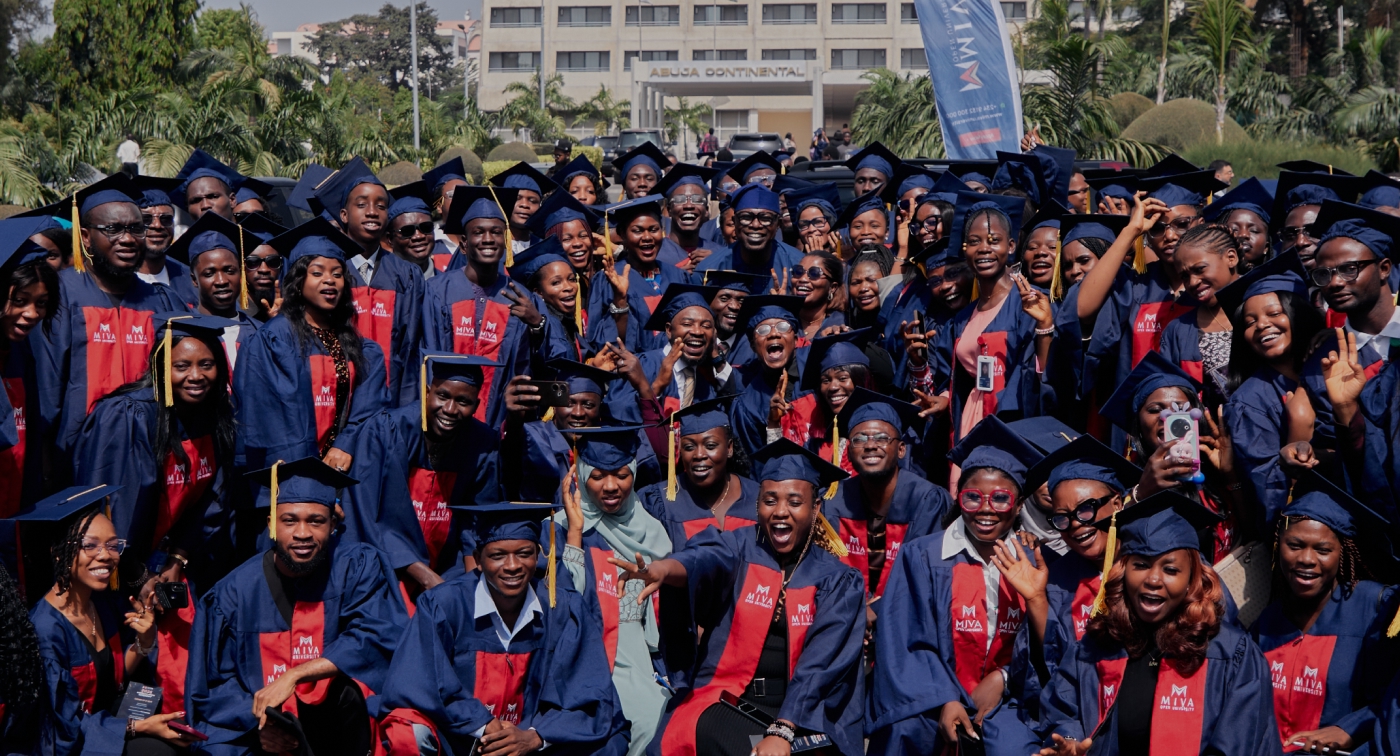
Another common myth is that online students study completely alone without any interaction or support. On the contrary, modern online learning is designed to be highly interactive and engaging. For example, at Miva, students regularly join live virtual classes where they can ask questions in real time, just like in a physical classroom. They also have study groups and communities where they exchange ideas, share perspectives, and learn from one another.
In addition to that, group projects are central to many online programmes, encouraging collaboration and teamwork among students, even when they are in different locations. Institutions like Miva also organise physical networking events and peer activities at different locations to help students connect beyond coursework.
Such a great time at Miva’s Fresher’s Connect! 🥳
— Miva Open University (@mivauniversity) February 1, 2025
Our new cohort of students are connecting, networking, making memories and having fun while at it 🤩#MivaFreshersConnect #MivaOpenUniversity #MivaStudents #MivaConnect #FlexibleEducation #MivaCommunity #Flexibility pic.twitter.com/l4ysNs199A
Lecturers remain actively involved throughout the course as well. They provide guidance, respond to questions, give detailed feedback on assessments, and support students’ academic progress.
All of this creates a structured and connected learning experience that closely mirrors, and in some cases even extends beyond, what students experience in traditional on-campus education.
Myth 5: Online Degrees Are Substandard
Some people assume that online education is of lower quality than traditional university learning, mainly because it is delivered differently and does not take place in a physical classroom.
However, the truth is that quality is determined by the institution offering the programme, not the mode of study. Accredited online programmes are held to the same regulatory and academic standards as on-campus degrees. They go through approval processes, curriculum checks, and continuous quality assurance to ensure they meet required benchmarks.
These programmes are also taught by qualified lecturers and subject experts who design course materials, deliver lectures, and assess student performance. In addition, students are evaluated through structured assessments such as assignments, projects, quizzes, and examinations, just like in traditional university settings.
When properly designed and accredited, an online degree is just as rigorous, structured, and academically demanding as an on-campus degree.
Myth 6: Online Degrees Don’t Lead to Postgraduate Study
Another misconception is that online degrees cannot be used to further academic studies.
In reality, accredited online degrees are fully accepted for postgraduate admissions both in Nigeria and internationally. Universities evaluate applicants based on accreditation status, academic performance, and relevant experience rather than the mode of study.
As long as the degree is from a recognised institution and meets entry requirements, graduates can proceed to master’s or doctoral programmes without restriction.
Myth 7: Online Degrees Require Expensive Technology
Many people assume that online learning requires costly laptops, high-speed internet, or advanced technical tools.
However, most online programmes are designed to be accessible. A basic smartphone or laptop, along with a stable internet connection, is usually enough to participate fully in classes and complete assignments.
Many learning platforms are also optimised for mobile use and low data consumption, making it easier for students to study without heavy financial pressure.
This accessibility is one of the key advantages of online education.
Myth 8: Online Degrees Are Only for Technology or Business
Some people believe online education is limited to fields like technology or business, but this is not the case.
Online programmes now cover a wide range of disciplines, including education, social sciences, law, health sciences, and creative arts. Students can pursue different career paths depending on their interests and goals.
For programmes that require hands-on training or practical experience, many institutions use blended or hybrid learning models. This ensures students still gain real-world exposure alongside their online studies.
Myth 9: Online Learning Lacks Structure
Some people think online learning is unstructured and completely flexible without clear direction.
In practice, online programmes are carefully structured with defined schedules, deadlines, and learning milestones. Students are guided through each stage of the course with clear expectations.
The flexibility mainly relates to where and when students study, not whether the programme itself has structure.
Myth 10: Online Degrees Don’t Build Soft Skills
There is also a belief that online education does not help students develop soft skills.
In reality, online learners actively build important skills such as communication, teamwork, leadership, and problem-solving. Miva Open University gives its students platforms to develop these skills through group projects, discussions, presentations, and virtual/on-site collaboration with peers, such as simulations and AI hackathons.
As a result, online education still prepares students for the workplace in both technical and interpersonal ways.
In Conclusion
Online degrees in Nigeria are helping to remove barriers to education and make learning more flexible and inclusive. By understanding the facts behind these common myths, you can make better decisions and fully benefit from the opportunities online education provides.
If you’re ready to begin your flexible, distance-learning journey with Miva while enjoying other benefits like a vibrant student community and dedicated support, apply now to get started.