There are moments in the life of an institution that become larger than ceremony. They become proof.
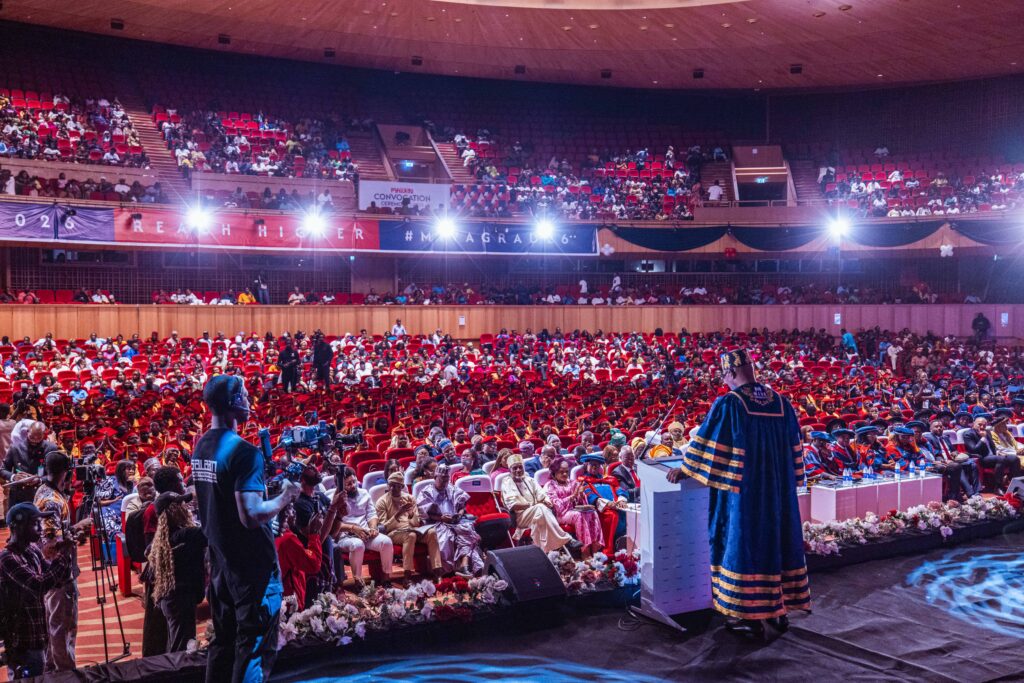
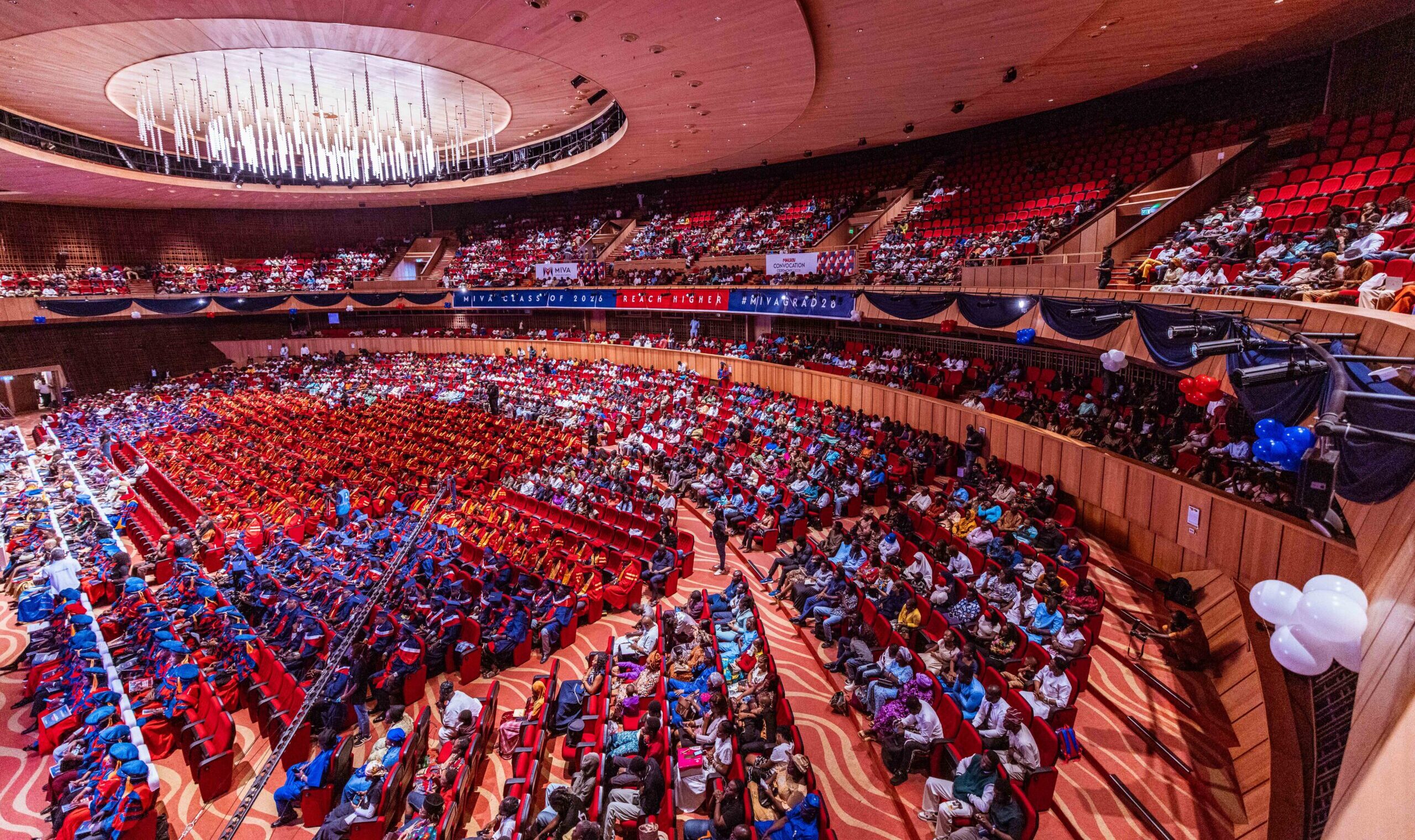
Miva Open University’s maiden convocation is one of those moments. It is a celebration of degrees earned, certainly, but more importantly, it is a celebration of perseverance, of second chances, and of the conviction that quality education should adapt to people’s lives rather than demand that people put their lives on hold.
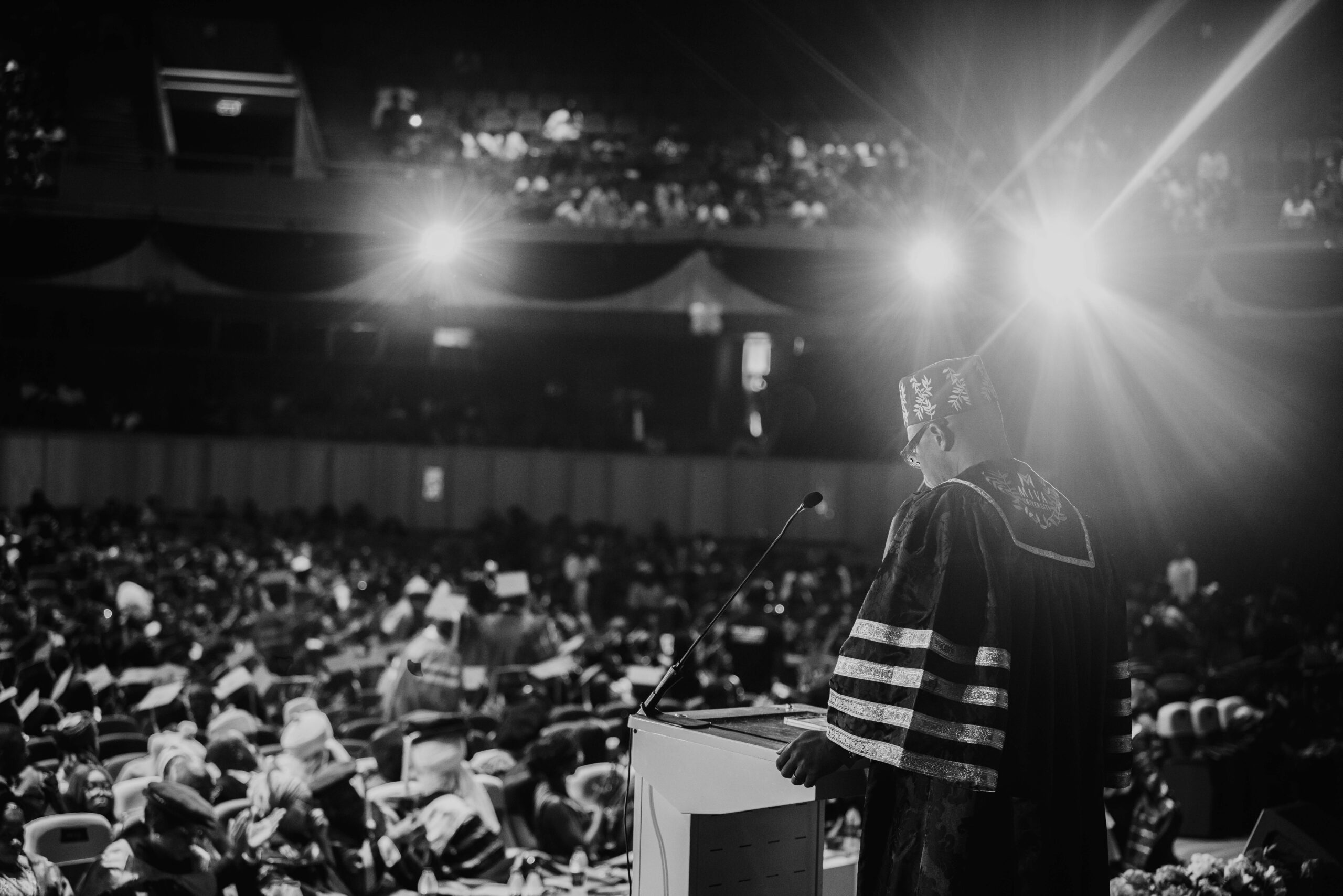
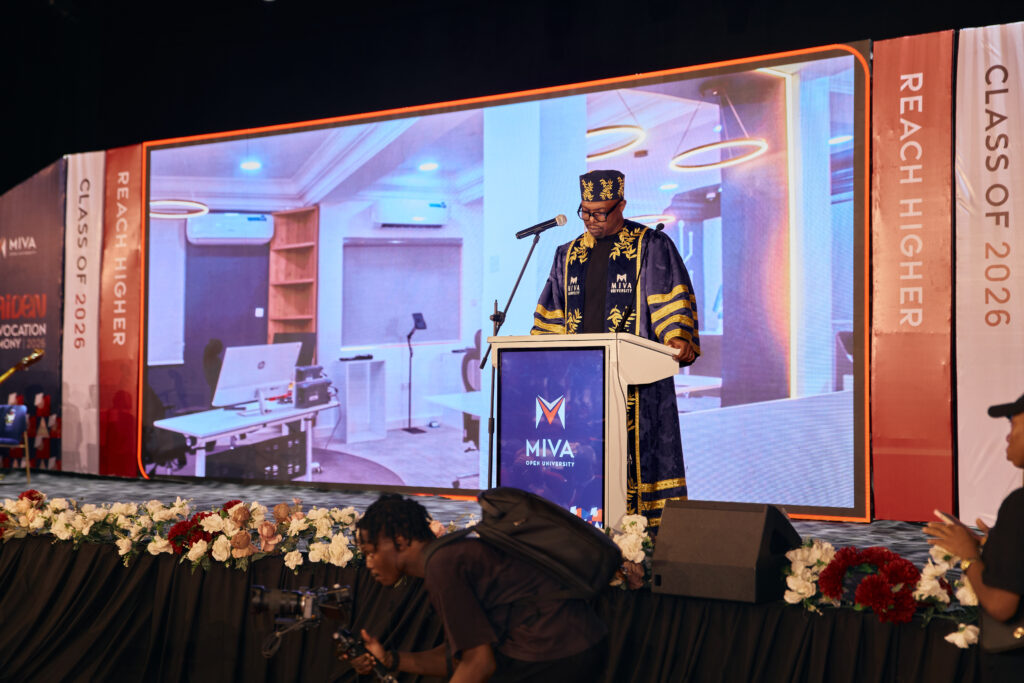
In this address given at Miva’s maiden convocation, the Chancellor, Sim Shagaya, reflects on the journeys that brought Miva’s first graduating class to this stage. It is a speech about proving doubters wrong, building boldly, and choosing hope in difficult times.
Read the full speech below.
In This Post
The Chancellor’s Speech
Good day, everyone.
All protocols duly observed here today, and to our maiden graduating class of Miva Open University… Congratulations!
Look at yourselves and the gown on your shoulders; the people who came to watch you wear it; and the years that are folded silently into this day. I know what most of you carried to get to this chair. That’s why I say today belongs to you.
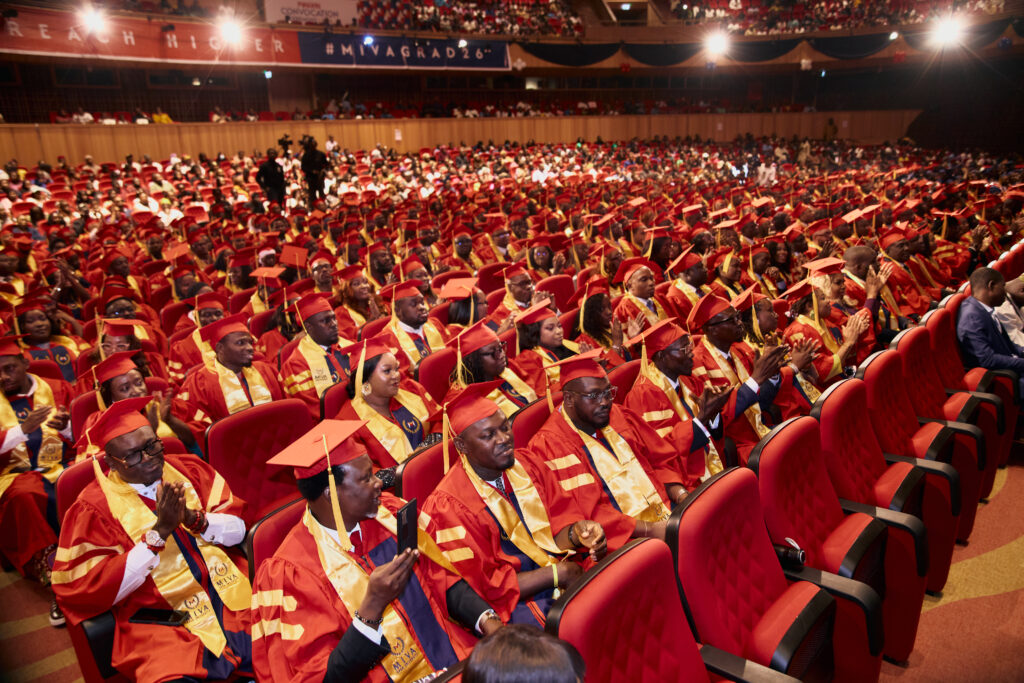
Many of you sitting here today are working adults. You are mothers and fathers who, despite holding down a full day’s work, chose to open a laptop to study at ten o’clock at night, when the house had gone quiet, when your body was begging you to sleep, and instead you studied. You are entrepreneurs who listened to video lectures in traffic and submitted assignments when life was demanding something else. You kept going even when nobody was watching.
You took a risk. There were nights, be honest, when you wondered whether any of it was real. Whether a degree earned online at a young Nigerian university would be respected, whether all the late nights would be worth it, and whether people would take this journey of yours seriously. There were probably nights when the internet connection failed, nights when the continuous assessment was due, nights when you sat alone in the dark, wondering if this was worth it.
You probably doubted yourself, but you did not quit. You kept going; you held the line, and that is why you are sitting here today, draped in the most regal gowns in this room today.
You did it anyway.
That is the first thing I want said in this hall today, loudly enough for the cameras and for everyone watching at home to hear it: you did it anyway.
Proof Beyond Numbers
When we admitted our students, we did not admit statistics; we admitted lives, and I want to hold up one of them, not because she is the only one but because she stands for thousands of you.
I want to tell you about one of our graduates sitting in this hall today.
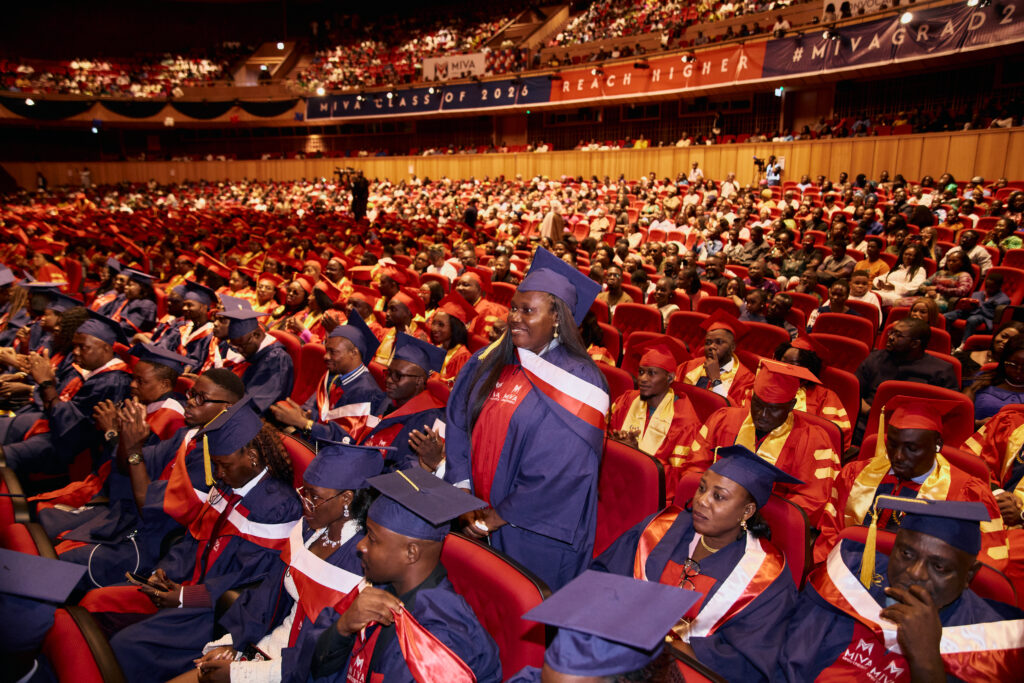
For seven years, Winniefred Agboola fought to complete her education at a state university. She put in seven years of effort, sacrifice, and hope, yet the finish line kept moving, and she never could graduate. Then life spoke louder than her plans, and she made the decision that mothers across this country make every day: she stepped back, went home, and gave the next ten years of her life to raising her children.
Ten years.
I want you to sit with that number. Ten years during which the dream of a degree never left her; it just had to wait. She focused on being a wife, mother, and entrepreneur, but underneath all of it, she was still someone who had not given up on herself.
When she found Miva, she did not find a shortcut. She found a door that finally fit her life. And in three and a half years, balancing every one of those responsibilities at once, she completed what had waited a decade to be finished.
She stands before you today not just with a certificate but as living proof that the barrier was never ability; it was access. What was missing was a university that could reach her where she was, in her home, in her season of life, without asking her to abandon any of it. Miva was that university.
Remember her face. Long after you have forgotten every sentence I say today, remember that face. Because she is the argument. She is the proof.
Proof of what?
Here is where I want to be careful, because it would be easy to stand here and reel out numbers about what Miva has built, and I am proud of it, prouder than I can decently say. However, the numbers only matter because of what they prove.
Building and Innovating in Nigeria
For most of my life, I have listened to pessimism about this country. That world-class things cannot be built here. That if you want excellence, you must export yourself to find it. That Nigeria is a place you escape from, not a place you build.
Miva exists to say: that is not true.
We built a university—Nigerian-founded, Nigerian-run, for Nigerians—and it grew at a scale people told us was impossible. But we aren’t stopping there. To power the next generation of global tech leaders, we have expanded into new physical learning centres to bring support closer to you, and we have launched cutting-edge robotics and drone laboratories.
These labs are more than just rooms filled with advanced hardware; they are innovation incubators. Here, students don’t just read about the future; they build it. By mastering autonomous systems, aerial robotics, and hardware engineering, our students are preparing to solve real-world Nigerian challenges, from precision agriculture and logistics to infrastructure monitoring and smart automation. We are shifting the narrative from consuming technology to actively engineering it.
We have also expanded our programmes. We recently launched the bachelor’s degree in artificial intelligence, one of the first of its kind in Nigeria.
By investing in AI education, Miva is making a declaration: Nigerians will be the builders of the AI age, not bystanders to it. We will write the algorithms that solve our traffic, manage our grids, diagnose our illnesses, and optimise our farms.
Every one of those is not a brick in our monument. It is a piece of evidence in an argument that excellence is achievable here, by us, for us.
We were told it couldn’t be done, but we did it anyway.
The Case for Hope
But let’s be honest, these have been hard years. I will not stand here to tell you to “reach for the stars” while your feet are navigating the reality of the Nigerian economy.
The cost of living has bitten everyone in this room. Reforms that are necessary have still been painful, and a reform’s necessity does not refund the family that is struggling to afford the things it could afford two years ago. There is the steady ache of watching talented friends pack their bags. There are mornings when the rational, sensible response to Nigeria is to give up on it. Why stay? Why build here?
Some of you graduating today already have your eyes on the exit. You are updating your LinkedIn profiles, looking for opportunities abroad.
But I want to make the case for Nigeria.
The case for hope is not that the difficulty is small. The case for hope is you. It is Winniefred Agboola, standing a moment ago. It is a university that wasn’t supposed to be possible, full of graduates who weren’t supposed to make it, in a country that is supposedly hopeless. Hope is not the denial of the hardship. Hope is the thing that gets built in the middle of it—and you are holding the receipts.
The whole world is being remade right now; power is shifting between nations, and underneath all of it runs a deeper current: artificial intelligence is rewriting what work is, what knowledge is, what a human being is for. This is not a far-off thing. It is the weather of the next forty years of your lives.
And there is a real danger for Africa in this. The danger is that the future gets built somewhere else and shipped to us, that we become consumers of other people’s intelligence, users of tools we did not make, acted upon by an age we had no hand in shaping.
That is exactly the passive role those AI degrees are a refusal of. When Miva teaches Nigerians to build these systems, not to operate them, to build them, we are making a claim on the future. We are saying: Africans will be authors of the AI age, not its audience. Builders, not bystanders.
So here is my charge to you:
Build. Whatever your field, build something that wasn’t here before you.
Stay and build, or go and bring it back, but do not let your country be a place you merely came from.
Refuse the easy cynicism. It is cheap, it is comfortable, and it is the single most defeating thing in Nigerian life. Cynicism is the tax the lazy pay on hope. Refuse to pay it.
And this above all: be the proof for the next person who doubts. Somewhere out there is a tired person at a laptop at ten o’clock at night, wondering whether it’s worth it, whether someone like them can really do something like this. You are now the answer to that question. Live so that your life says yes.
Graduates of Miva.
They said a university like this couldn’t be built here. We built it.
They said students like you couldn’t make it. You’re sitting here.
They say the future will be made somewhere else and handed to Africa. You are going to be among the people who make it.
We were told it couldn’t be done.
Go and keep proving them wrong.
Congratulations. The whole country is watching you, and today, because of you, it has a little more reason to believe.
Thank you.
Conclusion
As the applause fades and the gowns are folded away, the message of this convocation remains.
Miva’s maiden graduating class is more than the first cohort of an online university. They are evidence that talent exists everywhere, that opportunity can be redesigned, and that excellence can be built in Nigeria by Nigerians for the world.
The Chancellor’s challenge to these graduates is ultimately a challenge to all of us: to reject cynicism, to embrace possibility, and to become builders of the future we want to see. If this convocation proved anything, it is that the people who dare to believe in a different future are often the ones who create it.
And if Miva’s first graduates are any indication, the future is already in good hands.